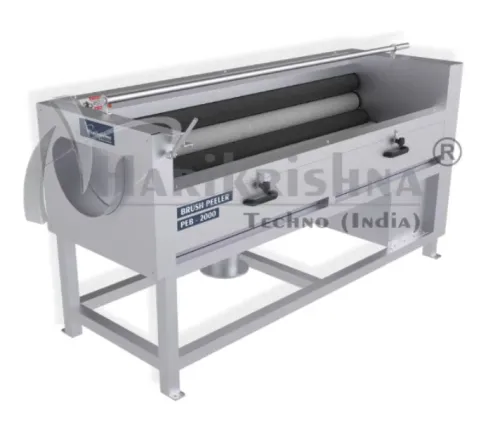
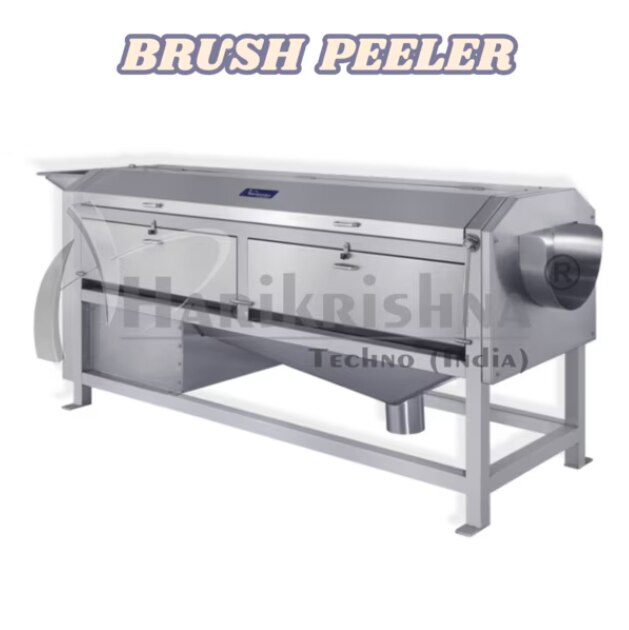
Patchy peeling usually comes from a mismatch between the vegetable batch and the machine setup, not from Rajkot itself. You will be able to identify whether the cause is raw material variation, brush wear, loading, water, speed or machine choice, then test the correction without hiding product loss behind a high capacity figure.
Key takeaways
- Inspect potato eyes, ridges, cracks, stem ends and dried skin before blaming the machine.
- Replace glazed or worn brushes and control loading, water flow and brush speed together.
- Run a standardised batch test to separate raw-material defects from machine performance.
- Choose abrasive peeling or knife peeling when the finish must be uniformly smooth.
Which raw-material conditions cause uneven brush peeling?
Deep eyes, ridges, stem ends, cracks, thick or dried skin, and irregular shapes retain skin because brushes reach protruding surfaces more easily than concave defects. The same abrasion removes flesh first from high spots. This is the main cause of brush peeler uneven peeling on potatoes and other root vegetables.
| Condition | Peeling result | Correct response |
|---|---|---|
| Deep eyes, stem ends, cracks or scab tissue | Residual skin remains in protected recesses | Trim defects or use a second process |
| Ridges and irregular shapes | Protruding areas lose flesh before hollows clean up | Accept controlled variation or change the peeling method |
| Oversized vegetables | Too few effective brush contacts before discharge | Grade them separately or increase residence time |
| Undersized vegetables | Excess abrasion, bruising or passage through brush gaps | Grade them separately and reduce exposure |
| Soft produce | Surface tears and bruises instead of clean abrasion | Reject damaged pieces and handle a firmer batch |
| Heavy soil load | Soil and stones block contact and wear brushes | Remove soil, stones and metal before loading |
| Wet, muddy or very dry surfaces | Contact and friction change across the batch | Control surface moisture and avoid loading mud-coated produce |
A mixed-size batch creates a process mismatch: large pieces receive too few brush contacts while small pieces are over-processed. Grade by size and narrow the range before peeling; reject cracked, rotten or mechanically damaged vegetables.
Residual skin around a deep eye can be normal for abrasive peeling. Patchy skin across otherwise uniform pieces is not: it points to inconsistent contact, overloading or unsuitable raw material. A brush peeler for leaving uneven vegetable skin in Rajkot is therefore facing a batch or setup problem, not a geographic one.
How do brush condition, loading, water and speed change the result?
Brush condition, loading, water and speed determine whether peeling is even. Inspect every brush row for flattened bristles, reduced diameter, exposed length, stiffness differences, and local hard or soft sections. Compare wear across the complete chamber, not just the visible area. Blocked brush gaps, poor alignment and trapped soil reduce contact.
Distribute vegetables evenly across the chamber. Overloading, excessive feed rate, low brush rotation, fast conveyor or drum speed, and short residence time reduce brush contacts and leave more skin. Start with cleaning and brush condition, then adjust size grading and feed rate, followed by water and pressure; change one setting at a time.
Use this operating sequence:
- Remove stones, metal and trapped debris, then clean between crops.
- Check that brushes are suitable for food contact, aligned, draining freely and free from standing water.
- Run a timed trial at the target chamber load and feed rate.
- Adjust rotation, conveyor or drum speed only after checking contact and residence time.
| Setting | Too little or slow | Too much or fast |
|---|---|---|
| Brush contact | Residual skin from worn rows or poor alignment | Flesh loss, bruising or brush damage |
| Water flow | Soil, starch and peel coat the brushes | Friction falls and abrasive debris washes away |
| Loading and feed | — | Fewer contacts and shorter residence time |
Trial water flow as a process variable, not a pump assumption. Record the result after each change, and inspect both residual skin and flesh loss. Clean brush gaps and confirm drainage before every repeat trial.
How can you prove whether the machine or the batch is at fault?
A reliable diagnosis starts with a clean machine and a representative, size-graded sample, not a mixed load. Remove trapped soil and peel, then run a fixed-time test at the intended feed rate.
Record these results for each size class:
- Kilograms per hour
- Number and percentage of pieces with residual skin
- Input and output weight
- Peel or flesh loss
- Damaged or bruised pieces
- Water used
- Cleaning time
Weigh a known input sample and the corresponding output sample. Calculate yield as output weight divided by input weight, multiplied by 100; visual whiteness alone can hide over-peeling of small pieces.
| Finding | Likely cause | Next check |
|---|---|---|
| Patchy skin across uniform pieces | Poor contact, excessive feed or worn brushes | Inspect brush rows, reduce loading and repeat |
| Skin on ends, deep eyes or concave defects | Product geometry, not necessarily machine failure | Test trimming or a second pass |
| Smooth surfaces are over-peeled or bruised | Excessive pressure, residence time or abrasive intensity | Reduce pressure or speed exposure |
| Centre pieces are worse than outside pieces | Chamber overloading or poor product distribution | Run a lighter, evenly spread load |
Replace brushes when bristles are flattened, shortened, contaminated or uneven across rows. Recondition them only when the manufacturer permits it and the working diameter remains consistent. Change one variable at a time: cleaning and brush condition, size grading and feed rate, then water and pressure.
Changing speed, loading and water together makes vegetable peeler processing problems impossible to trace.
When is brush peeling the wrong process for the required finish?
A brush peeler is the wrong choice when the specification demands a uniform peeled diameter, zero visible defects, or no secondary trimming. Brush peeler uneven peeling is an expected process limit on deep eyes, scab tissue, green areas, cracks and mechanically damaged skin.
| Process | Skin thickness | Shape | Throughput | Waste tolerance |
|---|---|---|---|---|
| Brush | Surface skin and light variation | Best on reasonably uniform produce; defects remain | High when feed is consistent | Moderate; some residual skin and natural variation allowed |
| Abrasive | Stronger, continuous removal | Handles surfaces broadly but can attack irregular areas | High with controlled loading | Lower; soft produce can lose excessive flesh |
| Blade | Controlled depth or peeled diameter | Precise on regular shapes; irregular pieces need more trimming | Suitable for specification-driven lines | Better control, but setup losses increase |
| Manual trimming | Selective defect removal | Works on eyes, cracks and damaged areas | Low; labour limits output | Useful when saving sound flesh matters |
Set two acceptance limits before choosing: the maximum residual-skin percentage and maximum product loss by weight. Do not judge the result by whiteness alone; a white sample can hide excessive flesh removal.
If zero visible defects, precise geometry or no repeat handling is required, increasing brush pressure is not the solution. Use abrasive or blade peeling, or combine brushing with inspection and manual trimming. Manual trimming remains practical for small batches, unusual shapes and defect removal, but it adds labour, sorting and repeat handling.
What should you test before buying a commercial brush peeler in Rajkot?
A catalogue capacity cannot tell you whether a machine suits your batch. If you are choosing a commercial brush peeler in Rajkot, demand a site-specific trial using the locally supplied variety, seasonal size range, soil load, moisture, required peeling depth and finished-product standard.
1. Ask the supplier to document the brush material, brush diameter, exposed length, adjustable rotation, usable chamber dimensions and feed-opening size. Confirm the water connection, drainage arrangement, electrical load, vegetable-specific rated capacity, spare-brush availability and service response for wear or adjustment problems.
2. Treat “500 kg per hour” as a test condition, not a guarantee. Confirm the vegetable variety and size distribution behind that figure; mixed sizes can leave large pieces unpeeled while small pieces lose excessive flesh.
3. Run acceptance testing with your actual seasonal batch, not uniform demonstration produce. By size class, record residual-skin incidence, product loss, damaged pieces, kilograms per hour, water use and cleaning time. Weigh known input and output samples so yield does not depend on visual whiteness alone.
4. Before signing off, verify installation, operator training, electrical supply, drainage and cleaning access at your Rajkot site. The phrase brush peeler for leaving uneven vegetable skin in Rajkot describes a process mismatch, not a geographic defect.
HARIKRISHNA TECHNO (INDIA) becomes useful when it supports this trial and explains the result, including brush adjustment, feed control and replacement timing, rather than quoting catalogue capacity alone. Reject a machine whose supplier will not test your product or define acceptable residual skin and maximum loss in writing.
Related products
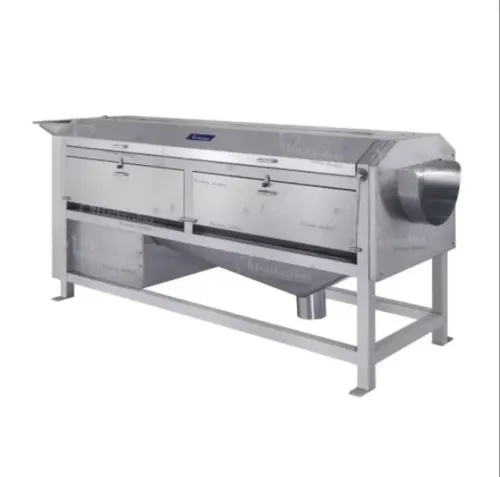
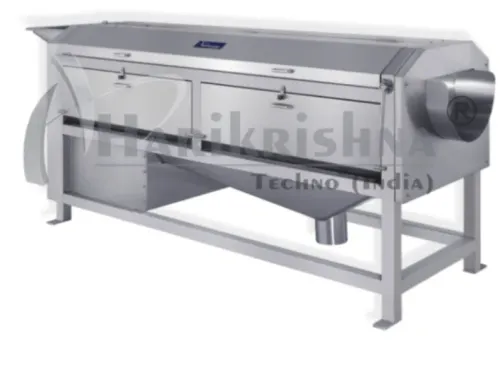
 | PEELER PEB-800 is a versatile food processing machine for washing, scrubbing, and peeling various root vegetables and fruits. View product → |
 | PEELER PEB-800 is a versatile food processing machine for washing, scrubbing, and peeling various root vegetables and fruits. View product → |
Frequently asked questions
Which raw-material conditions cause uneven brush peeling?
Deep eyes, ridges, stem ends, cracks, thick or dried skin, and irregular shapes leave skin in concave areas while high spots lose flesh first. Sort out severely damaged or misshapen vegetables before testing.
How can you improve brush peeler results?
Check brush wear, remove glazed bristles, keep loading depth consistent, adjust water flow, and test brush speed with a measured batch. Change one setting at a time and record peel loss and remaining skin.
How can you prove whether the machine or the batch is at fault?
Run a repeat test using a weighed, graded batch under fixed settings. Compare skin coverage, peel loss, throughput and defect counts with a second batch. If results change sharply by batch, raw material is the stronger cause.
When is brush peeling the wrong process for the required finish?
Use abrasive peeling or knife peeling when the product needs a uniformly smooth surface, deep-eye removal, tight peel-loss control, or a defined cosmetic grade that brush abrasion cannot provide.
What should you test before buying a commercial brush peeler in Rajkot?
Test your own vegetable variety and size range for at least several batches. Measure residual skin, flesh loss, capacity, water use, cleaning time, brush replacement access and performance at different loads.
Related products
 | PEELER PEB2000 is a versatile food processing machine for washing, scrubbing, and peeling various root vegetables and fruits. View product → |
 | PEELER POLISHER HKT polisher come with rollers and rollers covered with soft, durable brushes ( made of food-grade materials). |
 | PEELER Abrasive Peeler Model PE7CL used to remove the outer skin of fruits and vegetables through friction. View product → |
 | PEELER Our high-production abrasive peeler is a robust industrial machine designed for the efficient and continuous removal of skin or peel from a variety... View product → |
Keywords