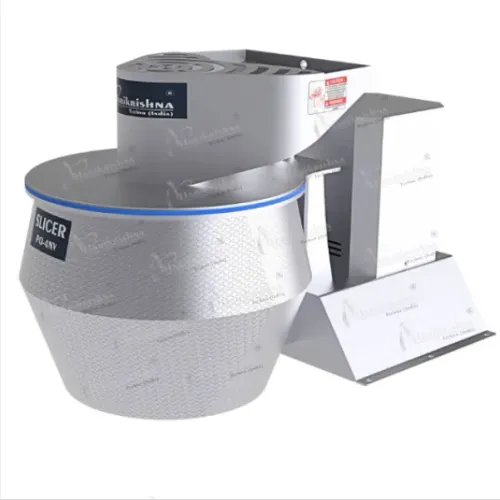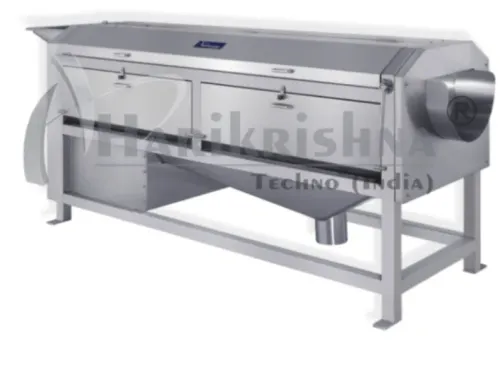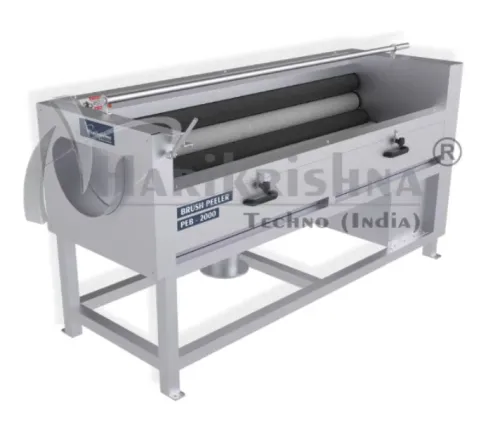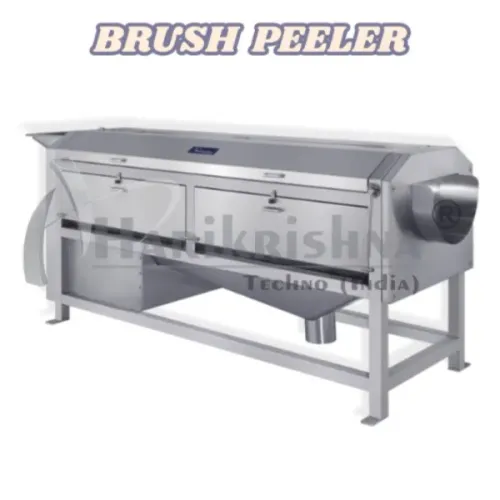
A food polisher can mean two different machines in a fried-onion plant: a dry or wet unit that cleans whole onions before slicing, or a post-fryer machine that removes free oil. You will learn how to identify the correct function, prepare onions for brushing, control damage and moisture, and test whether the machine improves finished birista quality.
Key takeaways
- Use brushing or light peeling to remove soil and loose skins before slicing.
- Adjust brush contact to clean onions without bruising edible layers.
- Control surface moisture before slicing, frying and quality checks.
- Test throughput, cleaning performance and onion damage with your own raw material.
What a food polisher does before fried-onion production
Whole raw onions can be cleaned before slicing, but they are not polished in the cosmetic sense. A pre-slicing “polisher” is better understood as a washing, scrubbing or light-peeling machine: rotating brushes, paddles or a rubbing surface loosen soil, dry outer skins and residue without stripping sound edible layers.
To answer how does a food polisher work in rajkot, identify the process stage rather than trusting the label.
| Stage | Machine action | Main material removed |
|---|---|---|
| Pre-slicing | Brushes or gentle abrasion contact whole raw onions | Soil, loose skins and surface residue |
| Post-frying | Basket or drum rotates fried slices to drain liquid | Free oil, clumps and loose fines |
A post-fryer de-oiler does not remove onion skin. It separates free oil from fried slices, so calling it a “polisher” can hide a costly mismatch: you may receive a machine for finished product when you need cleaner bulbs before the slicer.
Ask the supplier three questions before accepting a Rajkot quotation:
- Does it handle whole raw onions or fried slices?
- Does it run dry, or use controlled water?
- What test material was used: your onion variety and intended product stage, or a different sample?
A dry unit is not automatically a validated wash or sanitation step. Excessive brushing can bruise bulbs, split edible layers and reduce fried yield. Judge the machine by visible cleanliness, product damage and test results, not by the word “polisher.”
The food polisher working process for whole onions
The food polisher working process starts with receiving whole onions and ends only when clean, sound bulbs reach the slicer. Before loading, trim long roots and tops, remove split, rotten or badly bruised bulbs, and sort onions into a reasonably consistent size range; mixed sizes receive uneven brushing and produce inconsistent slices.
- Feed the prepared onions at a controlled rate. Keep a steady, shallow layer across the brush bed instead of allowing a heavy surge to bury the contact surface.
- Let each bulb contact the rotating brush, paddle or rubbing surface. This action loosens dry outer skins, attached soil and surface residue without intentionally removing sound edible layers.
- Apply water only where the machine is designed for wet cleaning. A controlled spray carries loosened material away; uncontrolled flow can spread dirty water and leave excess surface moisture.
- Inspect the discharge. Remove bulbs with remaining soil, damaged layers or concealed rot before they enter the slicer.
- Transfer the accepted onions directly to slicing, avoiding a dirty holding area between the two machines.
| Operating mode | Main action | Operator concern |
|---|---|---|
| Dry brushing | Loosens soil and dry skins | Control dust and inspect residue |
| Wet brushing | Brushes while water carries debris away | Control spray, drainage and surface moisture |
| Abrasive contact | Removes more outer material | Risk of losing sound onion layers |
Brushing is not automatically a validated wash or sanitation step. If the product specification requires microbial reduction or hygienic washing, add the specified wash and sanitation process and verify it separately.
How to balance cleaning, bruising and surface moisture
Use the lowest brush speed, shortest residence time and shallowest feed depth that remove visible soil and loose skin. Set roller spacing for the actual onion diameter: a gap that pinches smaller bulbs bruises them, while a wide gap leaves larger bulbs uncleaned.
1. Start with a soft-brush unit for loose soil and dry outer layers. An abrasive peeler can remove saleable onion flesh, increase trim and reduce fried yield.
2. Feed one consistent layer rather than burying bulbs under a deep charge. Increase brush speed or contact time only when discharged onions still show attached soil or debris; both changes also increase bruising, split layers and unusable trim.
3. Add water gradually when the machine is designed for wet cleaning. Excess flow leaves bulbs wet, overloads drainage and carries contamination into the slicer, so check the discharge rather than chasing a visually cleaner finish.
4. Inspect bulbs after discharge for visible soil, loose debris, bruising and split layers. During trials, measure surface drainage by recording drip time or the time needed for the bulbs to stop releasing free water; do not apply a universal moisture target.
5. Run the same onion diameter range through each setting and record slicer blockage, slice consistency, fryer temperature recovery and final crispness. Surface water affects all four, and a setting that cleans well but slows slicing or produces soft fried onion is not an efficient setting.
Where polishing fits in the complete fried-onion line
The polisher belongs before slicing when it removes soil and loose skins, but after frying when it removes free oil. The usual post-fryer requirement is de-oiling, not cosmetic polishing.
- Receive onions, sort out rotten or bruised bulbs, and pre-clean loose soil.
- Slice the prepared bulbs.
- Separate loose pieces and excessive fines before frying.
- Fry the slices, then drain or de-oil them.
- Cool, inspect, and pack only after the product reaches the required condition.
A polishing machine for fried onion is therefore evaluated by how gently it separates clumps and removes surface oil, not by how shiny the slices look.
| Machine | Operating action | Main limitation |
|---|---|---|
| Centrifugal de-oiler | Fried slices rotate inside a perforated basket; free oil passes through the openings. | Excessive speed breaks slices and creates powder. |
| Drum or tumbling unit | A drum lifts and drops slices against a perforated or draining surface. | Overlong residence darkens and damages the product. |
Set basket speed, batch mass, loading depth, residence time, product temperature, perforation size, and discharge method together. A heavy load shields slices from drainage; excessive speed or residence time produces broken pieces and fines. Product temperature also changes oil flow, while a poor discharge path can rewet or crush the batch.
De-oiling removes surface and free oil, not oil held inside onion tissue. Slice thickness, frying temperature and time, and cooling history control that internal oil. Cool the de-oiled slices before packing: trapped heat creates condensation, softens the product, and destroys crispness.
How to choose and test a commercial food polisher in Rajkot
Reject any quotation that gives capacity only as “500 kg per hour.” A commercial food polisher in Rajkot must state whether that figure applies to raw whole onion, raw sliced onion, fried onion at fryer discharge, or finished de-oiled onion; these outputs are not interchangeable.
| Stage | Capacity basis | Acceptance evidence |
|---|---|---|
| Pre-slicing | Raw whole onion | Visible soil, damaged-layer loss, water use and slicer performance |
| Pre-slicing | Raw sliced onion | Feed rate, slice consistency and blockage rate |
| Post-fryer | Fried onion at fryer discharge | Product temperature, batch mass, residence time and oil carryover |
| Post-fryer | Finished de-oiled onion | Finished yield, residual oil, broken-slice percentage and powder formation |
Run the trial with your onion variety, slice thickness, fryer temperature profile and target batch size. Record every result, including feed rate and product temperature; a demonstration using another onion or a dry substitute can falsely inflate capacity.
For a pre-slicing unit, inspect bulbs after discharge and check whether brushing removes loose soil without stripping sound layers. For a post-fryer unit, inspect the sloped drain, oil collection area, removable screens and discharge path so oil does not recirculate through the product.
Specify these purchase points in writing:
- Food-contact steel grade, gasket material, smooth welds and cleanable surfaces.
- Electrical compatibility, washdown provisions and operator access.
- Availability of replacement bearings, seals and perforated screens.
Compare HARIKRISHNA TECHNO (INDIA) with other Rajkot suppliers on this documented trial, fabrication evidence and after-sales support—not motor power or the word “polisher” alone.
Related products
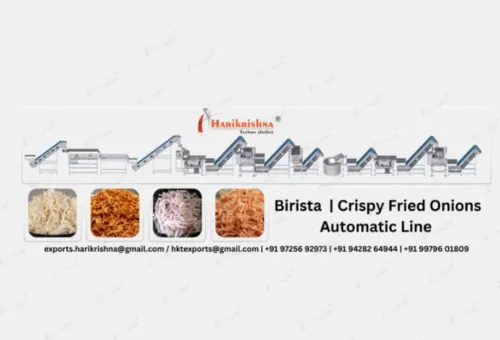
 | Birista Plant At Harikrishna Techno India, we offer a comprehensive and fully automated solution for the production of perfect birista (crispy fried onions). View product → |
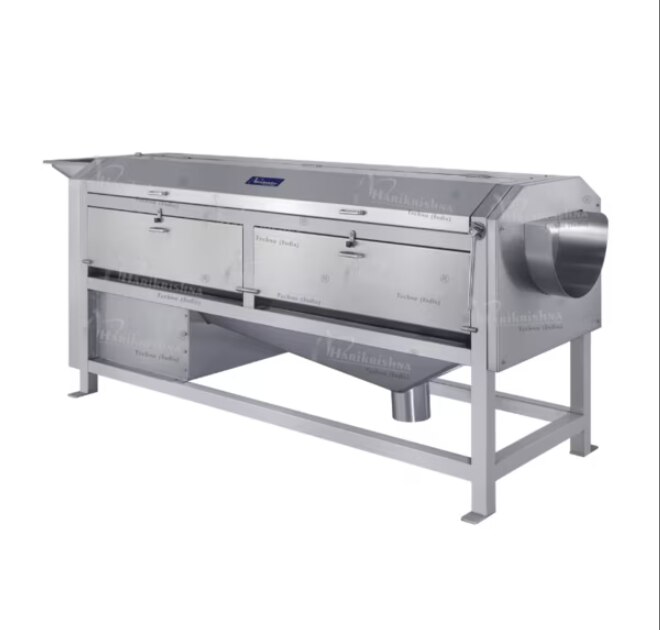
 | PEELER POLISHER HKT polisher come with rollers and rollers covered with soft, durable brushes ( made of food-grade materials). |
Frequently asked questions
What does a food polisher do before fried-onion production?
It removes soil, loose dry skins and surface residue from whole onions through washing, brushing, scrubbing or light peeling before slicing.
How does a food polisher work with whole onions?
Whole onions pass across rotating brushes, paddles or a rubbing surface that creates controlled contact while moving them through the machine.
How do you balance cleaning, bruising and surface moisture?
Use enough contact to remove soil and loose skin, then reduce pressure or residence time if onions show bruising; manage washing and drying so excess surface water does not enter slicing and frying.
Where does polishing fit in a fried-onion processing line?
Polishing comes before inspection, trimming and slicing, followed by frying and downstream draining, cooling and packing steps.
How should you test a commercial food polisher in Rajkot?
Run representative onions through the machine and check cleaning, edible-layer loss, bruising, surface moisture, capacity and ease of sanitation before purchase.
Keywords