Potato chips production at commercial scale involves much more than increasing the quantity of potatoes processed every hour. Consistency in slicing, washing, frying, seasoning, and handling has a direct influence on product quality, oil consumption, production efficiency, and the amount of finished product that can be packed and sold.
Working with a Potato Fully Automatic Chips Plant Manufacturer in Gujarat can help food businesses understand how individual processing stages should work together as one coordinated production line. For processors in Rajkot and other industrial regions of Gujarat, this becomes particularly important when moving from manual or semi-automatic production to higher-capacity manufacturing.
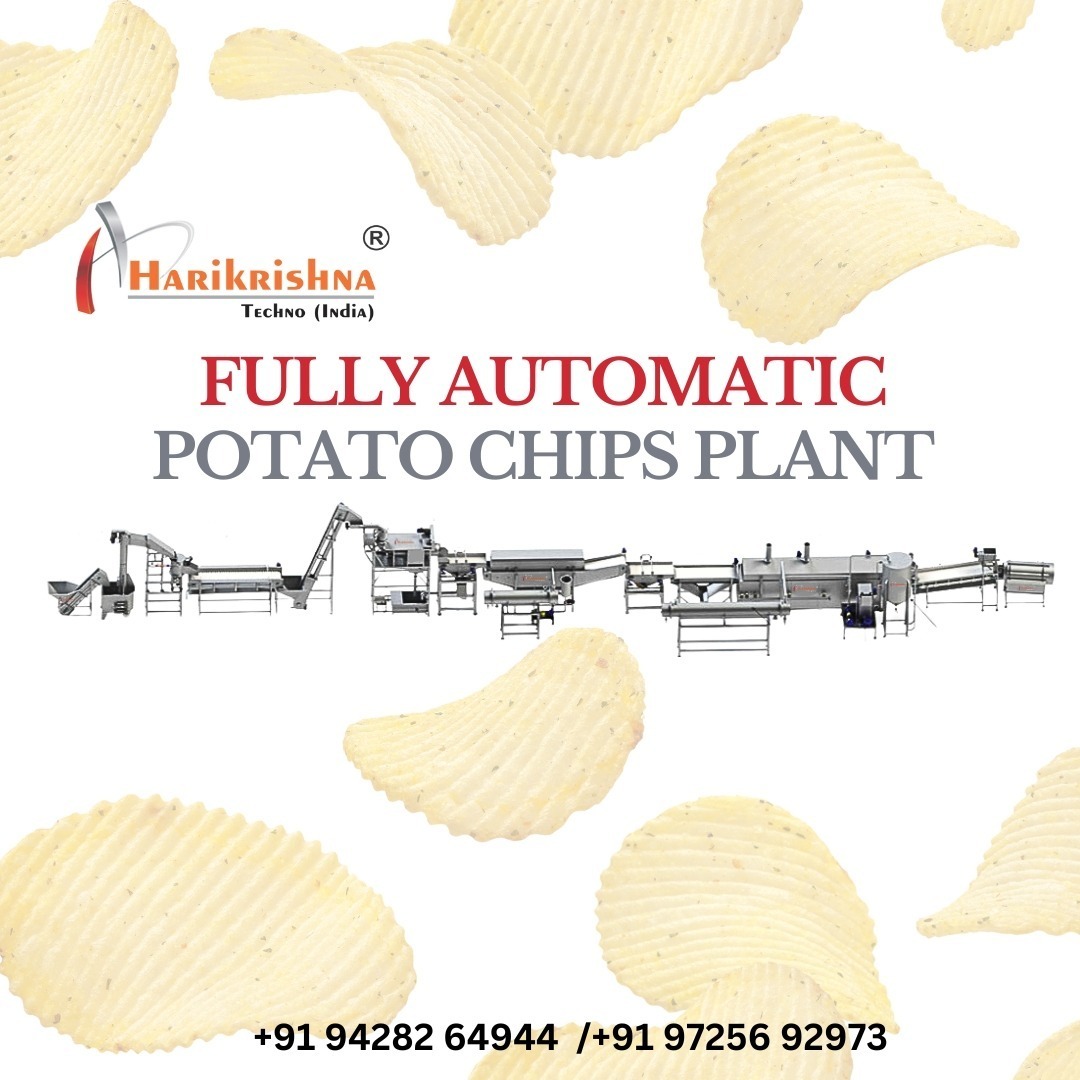
What Happens Inside an Automatic Potato Chips Line
Although plant configurations vary according to capacity and product requirements, a typical line may include several connected operations:
- Potato washing and cleaning
- Peeling
- Inspection
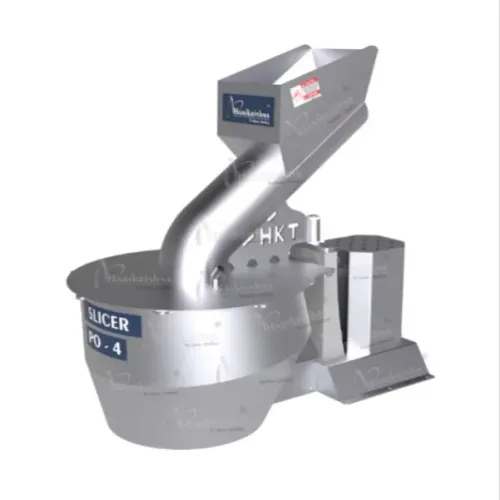
- Uniform slicing
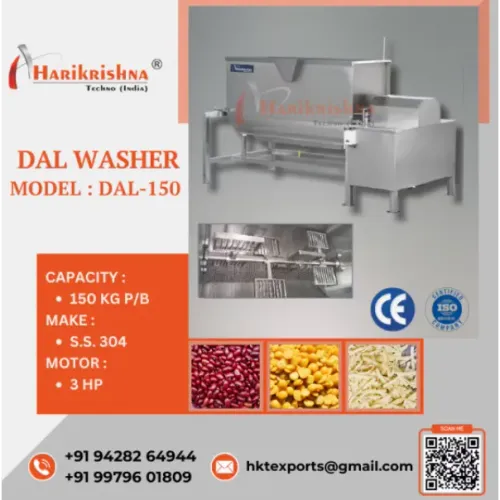
- Starch removal and rinsing
- Dewatering
- Frying
- Oil removal
- Seasoning
- Cooling and product transfer
Automation helps maintain a more controlled flow between these stages. Instead of relying heavily on workers to move and process batches manually, appropriately selected machinery can create a more continuous production process.
Why Uniform Processing Matters
A potato slice that is noticeably thicker than another may require a different frying time. When thickness varies significantly, some chips can become overcooked while others retain excess moisture.
Uniform slicing therefore affects more than appearance. It can influence:
- Texture consistency
- Frying behaviour
- Oil absorption
- Product colour
- Seasoning distribution
- Batch-to-batch quality
The same principle applies to washing, peeling, dewatering, and other stages. Each operation contributes to the performance of the final line.
Production Capacity Should Guide Plant Planning
A larger plant is not automatically the right plant.
Processors should first estimate their expected raw potato input, desired finished output, operating hours, available floor space, labour availability, and future expansion plans. Utility requirements such as electricity, water, fuel, ventilation, and drainage should also be considered before equipment selection.
This is particularly relevant for food-processing businesses around Rajkot, where manufacturers may serve local markets as well as distributors across Gujarat and other states.
Understanding the Complete Processing Requirement
HARIKRISHNA TECHNO (INDIA) manufactures food-processing machinery for businesses evaluating different levels of production automation. When planning a potato chips facility, buyers should discuss the complete workflow rather than evaluating one machine in isolation.
The right plant layout should support smooth material movement, practical cleaning access, appropriate operator movement, and compatibility between processing stages.
For a growing chips manufacturer, automation is most useful when it improves control and repeatability without creating unnecessary complexity. Understanding production requirements before selecting the plant makes it easier to build a line that matches actual business needs.
Keywords