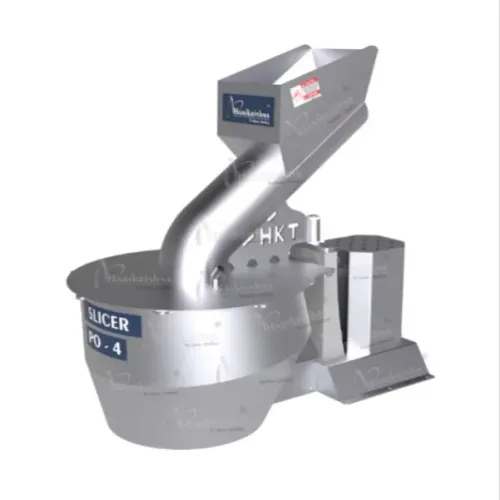
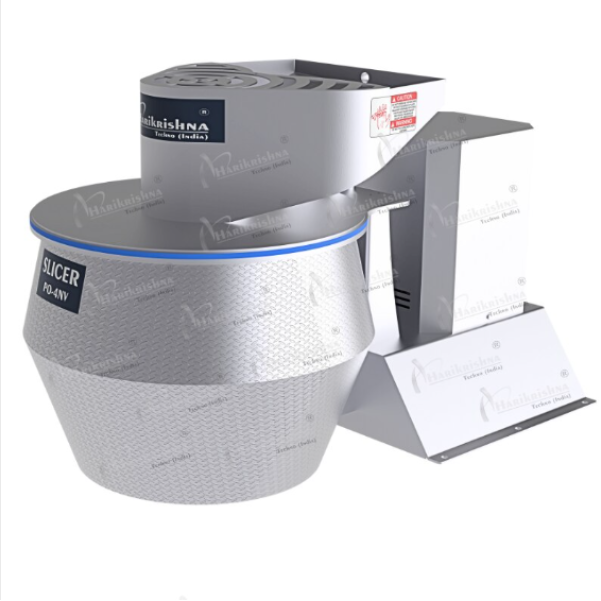
Dry fruits often require precise cutting because the finished appearance can directly affect their use in sweets, bakery products, snacks, garnishing, packaged foods, and ingredient mixes. Manual slicing may work for small batches, but maintaining uniform output becomes more difficult as volumes increase.
A commercial Dry-Fruit Slicer can help processors standardise cutting while reducing repetitive preparation work. For businesses in Rajkot and Gujarat's food-manufacturing sector, equipment selection should focus on product compatibility and cut quality as much as production speed.
Different Dry Fruits Behave Differently
Almonds, pistachios, cashews, and other dry fruits do not necessarily respond identically during cutting.
Size, hardness, moisture level, shape, and required finished form can influence machine performance. A processor should therefore avoid assuming that any slicing machine will deliver identical results across every product.
Testing or discussing the intended raw material is useful before purchase.
Evaluate the Finished Cut
A slicer should produce an output that matches the commercial application.
Important considerations include:
- Slice consistency
- Product breakage
- Thickness requirements
- Feeding stability
- Usable finished yield
- Handling after cutting
For premium food applications, excessive broken material may reduce the value of the finished product even if the machine processes a large quantity per hour.
Cleaning and Product Changeovers Matter
Food manufacturers frequently process multiple products using the same production area. Equipment that allows practical cleaning between batches can simplify hygiene procedures and product changeovers.
Operators should be able to access relevant food-contact areas according to the machine's cleaning procedure without creating unnecessary production delays.
Calculate Capacity Around Real Demand
Instead of selecting the largest available machine, estimate the quantity that must be processed during a normal shift.
If a business requires a particular daily output, factors such as operating hours, cleaning time, feeding rate, and product changes should be included when estimating required machine capacity.
HARIKRISHNA TECHNO (INDIA) manufactures machinery for food-processing applications where equipment can be selected according to production requirements.
For processors in Rajkot, a dry-fruit slicing investment should ideally improve consistency while fitting existing labour, space, and downstream packing arrangements.
The most appropriate machine is not necessarily the fastest model. It is the one that delivers the required cut with acceptable product handling, manageable cleaning, suitable throughput, and compatibility with the processor's actual workflow.
Keywords