Dehydrating onions is a systematic food-processing operation designed to reduce moisture while preparing the product for further handling, storage and commercial applications. The process requires much more than simply exposing sliced onions to heat.
Businesses planning dehydration operations in Rajkot and across Gujarat need to understand how the different processing stages work together.
What Happens Inside an Onion Dehydration Plant
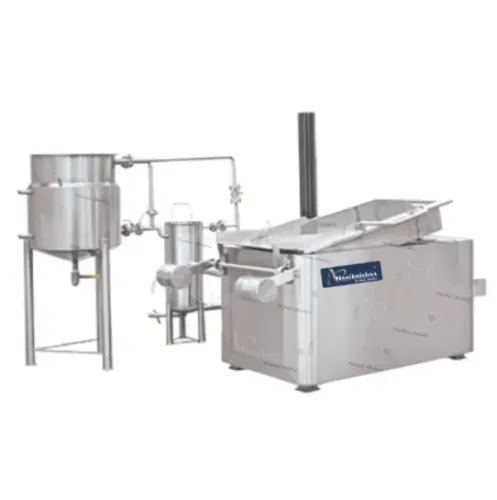
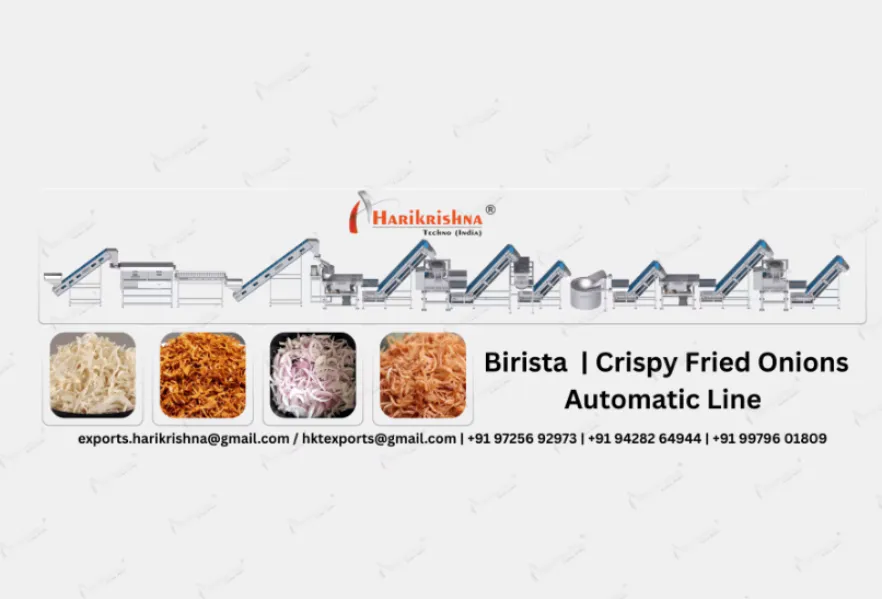
Fresh onions normally pass through a sequence of preparation and dehydration stages. Depending on the plant design, these may include sorting, peeling, washing, cutting, drying and subsequent handling.
The objective is to create an organised flow from incoming raw onions to dehydrated material.
Uniform preparation is particularly important because variations in cut size can influence drying behaviour.
Why Cutting Uniformity Is Important
Imagine drying a batch containing both thick and thin onion pieces. Smaller pieces may lose moisture considerably faster, while larger pieces require additional drying time.
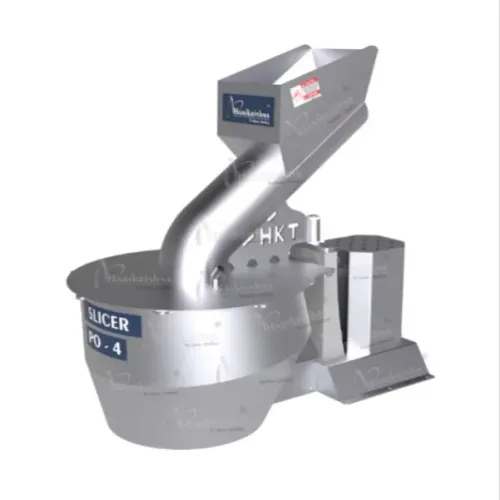
A controlled cutting process helps produce pieces with more consistent dimensions, making downstream processing easier to manage.
Important Factors Affecting Dehydration
Processors should pay attention to several variables:
- Raw onion quality
- Initial moisture level
- Cut dimensions
- Loading density
- Air circulation
- Drying temperature
- Drying duration
- Final moisture requirements
These variables interact with one another, which is why dehydration equipment should be selected according to the intended product and production requirement.
Gujarat's Food Processing Requirements
Gujarat has an established agricultural and food-processing sector, creating demand for machinery that can handle vegetables at commercial volumes. Rajkot's engineering base also makes the city relevant for processors sourcing machinery within the state.
Harikrishna Techno (India) provides food-processing machinery for businesses considering organised processing setups. When evaluating an Onion Dehydration Plant Manufacturer in Gujarat, buyers should discuss raw-material characteristics, expected output and the intended finished product.
Planning a New Onion Processing Setup
A processor should first estimate how much fresh onion will enter the plant during each production cycle. This helps determine the required capacities of preparation, cutting and dehydration equipment.
Factory layout should also provide sufficient space for raw-material movement, processing, finished-product handling and routine cleaning.
Another consideration is seasonal supply. Onion availability and procurement volumes may fluctuate, so equipment planning should reflect realistic operating patterns rather than only peak-season expectations.
A well-planned dehydration operation depends on coordinated preparation, uniform cutting and controlled processing. Understanding these fundamentals gives food businesses in Gujarat a clearer foundation before investing in an onion dehydration plant.
Keywords