The purchase is justified only when the machine’s usable batch output, low-speed torque, cleaning access and discharge method solve a measurable production problem. By comparing its action with other mixer types, calculating capacity from your demand and testing the hardest recipe, you can decide whether the labour, consistency and sanitation gains outweigh the equipment cost.
Key takeaways
- Choose an L type kneader for dense, low-moisture doughs needing strong folding action.
- Size batches by usable trough capacity, not the machine’s total volume.
- Calculate payback from labour, cycle time, waste and cleaning hours.
- Test your actual recipe, discharge method and cleaning process before ordering.
What “L Type” Means and How the Kneader Works
An L type kneader machine is a batch mixer built around a rigid trough and a low-speed kneading arm or blade that folds, compresses and stretches dense food mixtures.
“L type” is not a universal equipment standard: one supplier may mean an L-shaped vessel, while another means an L-shaped kneading arm, so confirm the geometry, working volume and quoted capacity.
Load ingredients through the top, usually adding liquid gradually to prevent dry pockets. The operator sets speed and mixing time from the control panel, watches motor load, then opens the outlet or tilts the vessel to discharge the finished dough.
A cover, inspection opening, gasket, shaft seal and weld finish affect cleaning; an enclosed machine is not automatically hygienic.
| Mixer | Main action | Strength | Limitation |
|---|---|---|---|
| L type kneader | Low-speed folding and compression | Stiff doughs, pastes and controlled batches | Batch-only operation and slower discharge |
| Spiral mixer | Spiral tool rotates through a fixed bowl | Dough development with efficient turnover | Less suited to some dense pastes and mixed formulations |
| Horizontal mixer | Paddles, ribbons or shafts move ingredients across a trough | Larger batches and broad ingredient distribution | Tool design determines whether it kneads or only blends |
| Planetary mixer | Tool rotates on its axis and around the bowl | Flexible tools, soft doughs, creams and small batches | Torque and bowl clearance can limit heavy dough |
Choose the L arrangement when repeatable batch kneading and robust low-speed torque matter more than continuous flow or delicate inclusion handling. Insist on motor torque, gearbox ratio and overload settings, not motor kilowatts alone.
Which Doughs Justify This Kneading Arrangement?
Choose an L type kneader when your recipes are batch-made and need strong, repeatable working rather than delicate handling. It suits besan dough, atta and maida dough, low-hydration stiff dough, snack dough and dense pastes. It can handle softer doughs when the arm profile, speed and working volume match the formula.
The l type kneader benefits are clearest in compact plants producing consistent batches of high-resistance dough. A l type flour kneading machine for food processing is a poorer choice when continuous output, rapid recipe changeovers or gentle treatment of fragile inclusions matters more.
| Option | Handles well | Choose a different mixer when |
|---|---|---|
| L type kneader | Besan, atta, maida, stiff snack dough and dense pastes | You need continuous flow or very gentle inclusion handling |
| Spiral mixer | Lean and moderately hydrated bread doughs | Your process depends on aggressive work for dense paste or stiff dough |
| Planetary mixer | Soft doughs, creams, batters and recipes needing interchangeable tools | You need high torque across large, dense batches |
| Continuous mixer | High-volume production with few recipe changes | You make varied small batches or require long, controlled kneading |
Do not approve a machine from an empty-running demonstration. Test your hardest recipe and record flour load, total batch mass, hydration, start and end temperature, mixing time, current draw, discharge time, residue and dough performance after scaling or baking.
How to Size the Machine for Real Production Demand
Do not size an L-type kneader from vessel volume or motor horsepower alone. “L type” is not a universal capacity class, so state the trough geometry, arm profile, working volume and batch basis in your purchase specification.
| Measure | Compare | Why it matters |
|---|---|---|
| Flour capacity | Flour input in kilograms | Excludes water, fat, sugar, salt and inclusions |
| Finished-dough capacity | Total batch mass in kilograms | Shows the actual load carried by the drive |
| Usable fill volume | Working volume, not vessel volume | Prevents overfilling that leaves unmixed dough |
| Motor torque | Rated output torque, gearbox ratio and service factor | Reveals resistance-handling ability better than kW alone |
| Hourly output | Batch mass ÷ complete cycle time | Includes loading, kneading, discharge and cleaning |
Use the same recipe when comparing machines. A low-hydration atta dough, rich dough or inclusion-heavy snack mixture can demand far more torque than a soft lean dough, even at the same batch weight.
Ask for a production trial on your hardest formulation and record:
- Flour load, total batch mass and hydration
- Start and end dough temperature
- Kneading time, current or power behaviour and overload trips
- Discharge time, retained residue and dough quality after scaling or baking
Request the motor’s duty rating and overload-trip setting for the industrial dough kneading machine. Also require a measured temperature rise at your intended speed and batch size; mechanical work becomes heat, and excess temperature can damage dough quality while reducing hourly output.
When Do Labour, Throughput and Sanitation Pay Back the Cost?
It pays back when the L type flour kneader benefits show up in every batch: fewer operators scraping stiff dough, shorter kneading cycles, better batch consistency and less product left behind. It is a weak investment if your plant needs continuous production, rapid recipe changes or gentle treatment of fragile inclusions.
| Design choice | Labour and throughput effect | Cleaning and downtime cost | Worth it when |
|---|---|---|---|
| Fixed vessel | Lowest purchase and maintenance complexity | Operators must scrape and recover dough manually | Batches are small and labour is inexpensive |
| Tilting vessel | Faster discharge and higher product recovery | Adds hinges, seals, guarding and washdown points | Stiff dough causes repeated scraping delays |
| Bottom discharge | Reduces unloading time and operator contact | Outlet, valve and dead zones need inspection and cleaning | You run many batches of the same formulation |
| Vacuum cover | Can improve density by removing entrained air | Requires a vacuum-rated seal, pump, condensate control and clear line | Deaeration is part of the product specification |
Sanitation determines the hidden cost. Specify smooth, fully welded food-contact surfaces, accessible inspection openings, a removable or cleanable gasket, drainable vessel geometry, cleanable shaft seals and welds finished without crevices. An enclosed cover alone does not prevent contamination.
US food CGMP rules require cleaning as often as necessary to protect food and equipment maintenance that prevents contamination. Ask for a written cleaning procedure and time it during a production trial; inaccessible residual dough becomes labour, allergen risk and downtime. Confirm whether capacity means flour input or finished dough output before calculating payback.
How to Test a Supplier Before You Commit
A dry demonstration proves rotation, not whether your stiff dough overheats, stalls or leaves residue. Require a witnessed trial using your flour, recipe, hydration, batch size and intended speed.
1. Record flour input, total batch mass, mixing time, start and end dough temperature, discharge time, motor current or power behaviour, and retained residue. Ask for the same readings at least twice; one successful batch proves little.
2. Judge the dough after scaling, forming and baking, not only by appearance in the trough. Check development, consistency, product weight and baked texture against your current batch.
3. Put the specification in writing: trough geometry, arm or blade profile, working volume, flour capacity, finished-dough capacity, speed range and discharge method. “L type” is not a universal classification, so confirm what the quoted capacity actually measures.
4. Inspect food-contact material certificates, welds, crevices, drain points and surface finish. Ask the supplier to demonstrate tool-free cleaning access and maintenance access; inaccessible residue becomes a contamination risk.
5. Request the electrical panel rating, earthing details, overload protection, emergency-stop test and guarding inspection. Obtain a spare-parts list, service response commitment and references running comparable doughs.
For anyone searching for an l type kneader manufacturer in rajkot, distance is not proof of performance. HARIKRISHNA TECHNO (INDIA) should be assessed by the same witnessed-trial records, fabrication documents and service commitments as every competing supplier. Reject a vendor who will not test your difficult recipe.
Related products
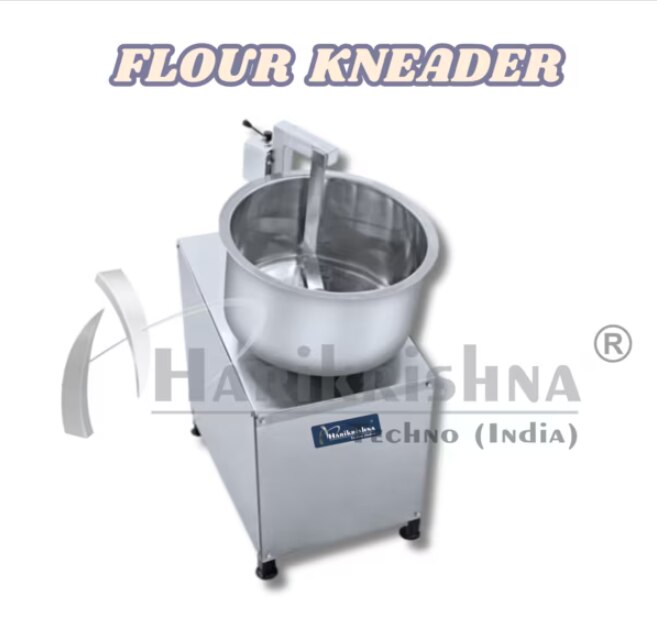
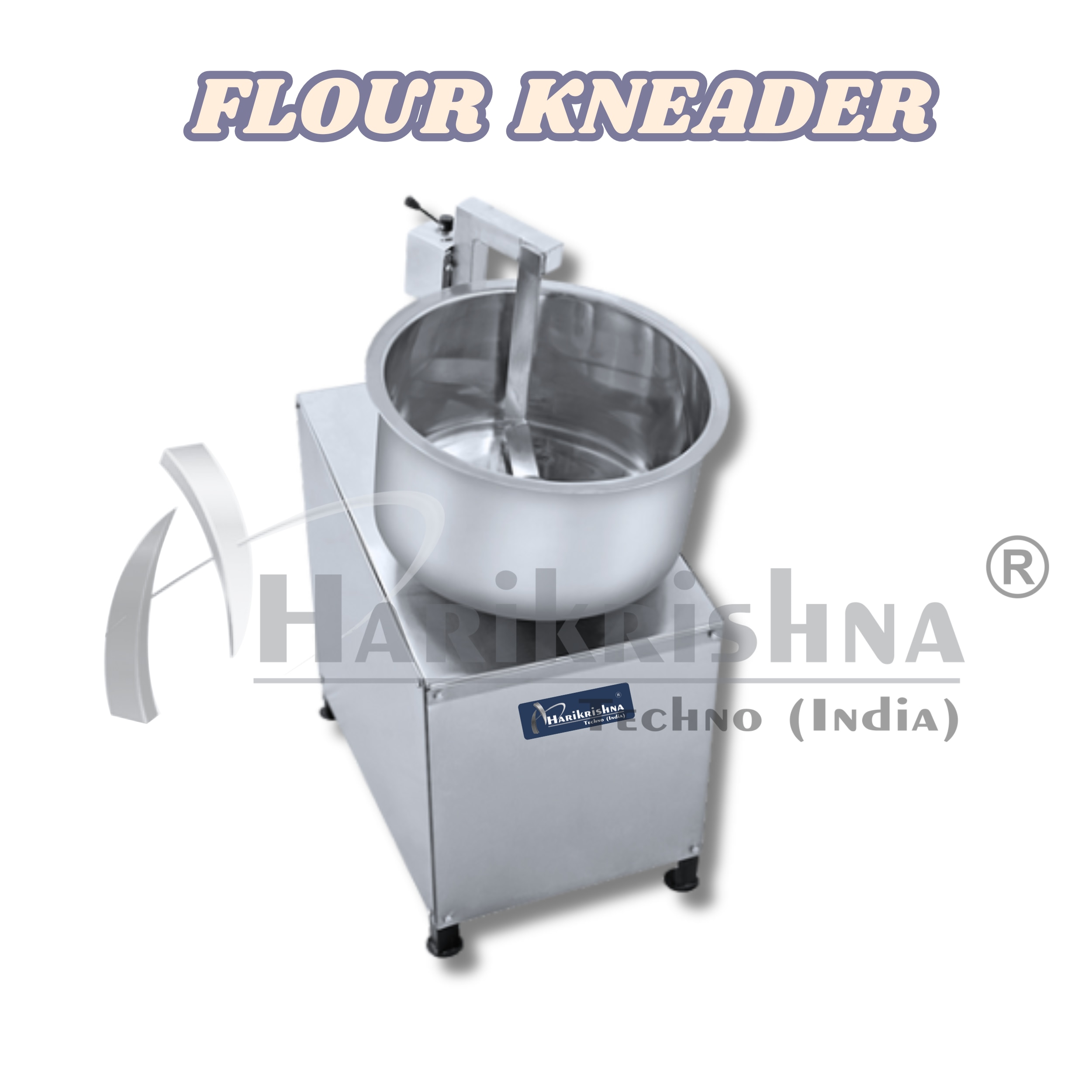 | FLOUR KNEADING MACHINE This L-Type Flour Kneading Machine is designed for efficient and consistent dough preparation, with a specialized function for besan products. View product → |
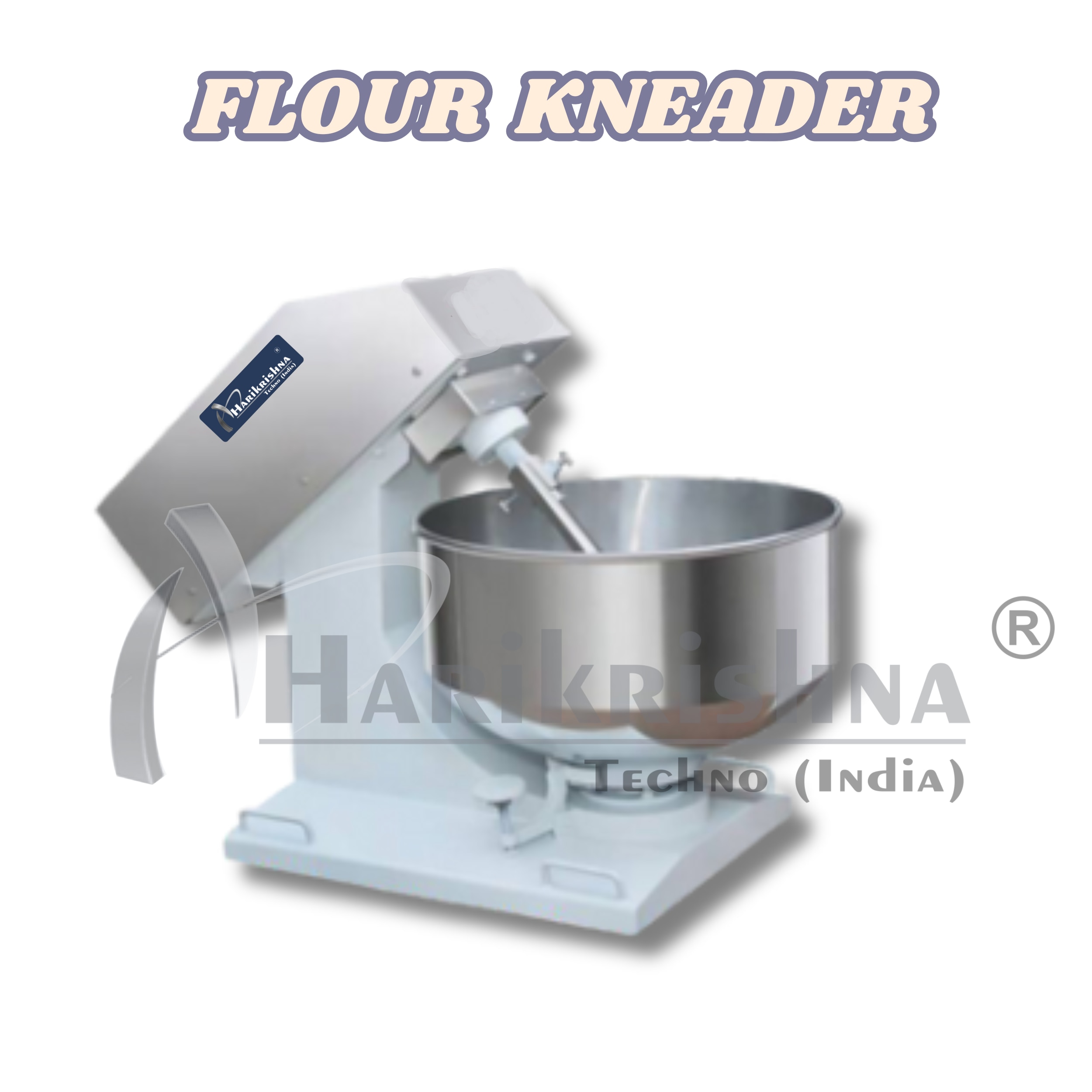 | FLOUR KNEADING MACHINE Our Flour Kneading Machine is designed for efficient and consistent dough preparation. View product → |
Frequently asked questions
What does “L Type” mean in an industrial kneader?
It describes a rigid trough with a low-speed kneading arm or blade that folds, compresses and stretches dense mixtures in batches.
Which doughs justify an L type kneader?
Dense, low-moisture doughs and stiff food mixtures justify the arrangement when they need strong mechanical working rather than gentle blending.
How should you size an L type kneader for production?
Calculate the required batch weight, dough density, mixing cycle, discharge time and usable trough capacity instead of relying on total vessel volume.
When does an L type kneader pay back its cost?
Payback improves when the machine reduces manual kneading, shortens repeatable batch cycles, lowers dough waste and simplifies sanitation.
How can you test an L type kneader supplier before buying?
Run your recipe at target batch size, inspect dough development and discharge, measure cycle and cleaning times, and verify documentation and service support.
Related product
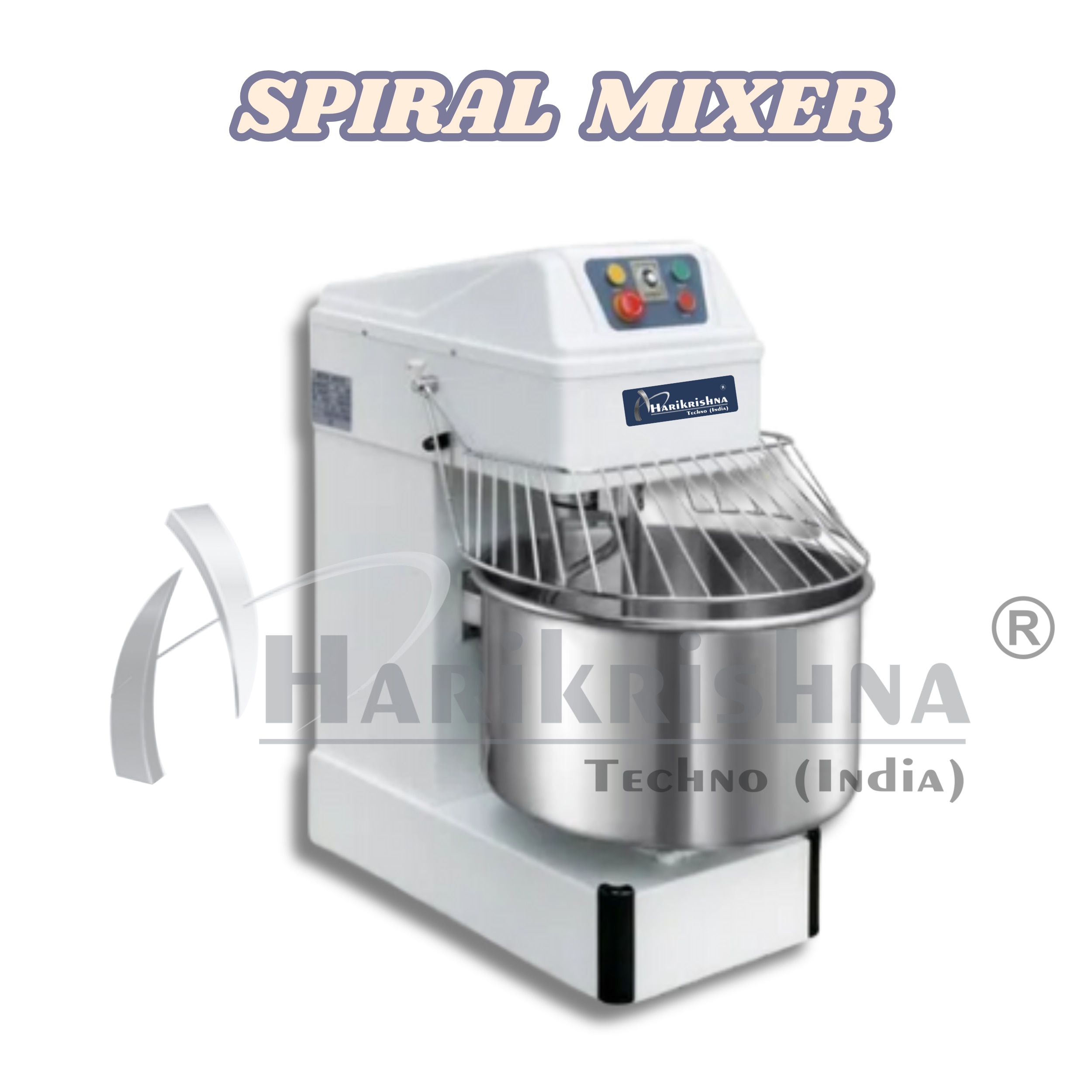 | FLOUR KNEADING MACHINE Spiral Mixer The Spiral Mixer is an essential machine for dough preparation, designed for efficiency and durability. View product → |
Keywords