A supplier can call a slicer, fryer and packing machine an “automatic plant” while leaving out the conveyors, utilities, filtration, controls and testing that determine whether the line will run. By checking the process flow, finished-chip capacity, raw-potato specification, utility schedule and acceptance terms, you can compare quotations on the same basis before committing.
Key takeaways
- Define every process step from raw-potato intake to finished-chip packing.
- Specify capacity as finished chips per hour, not raw-potato feed rate.
- Request slicer, peeler, fryer and utility specifications in writing.
- Make the quotation include site duties, acceptance tests and performance remedies.
Map the complete line before comparing prices
A complete line starts at raw-potato intake, not at the fryer. Use this flow to define the potato chips plant equipment included:
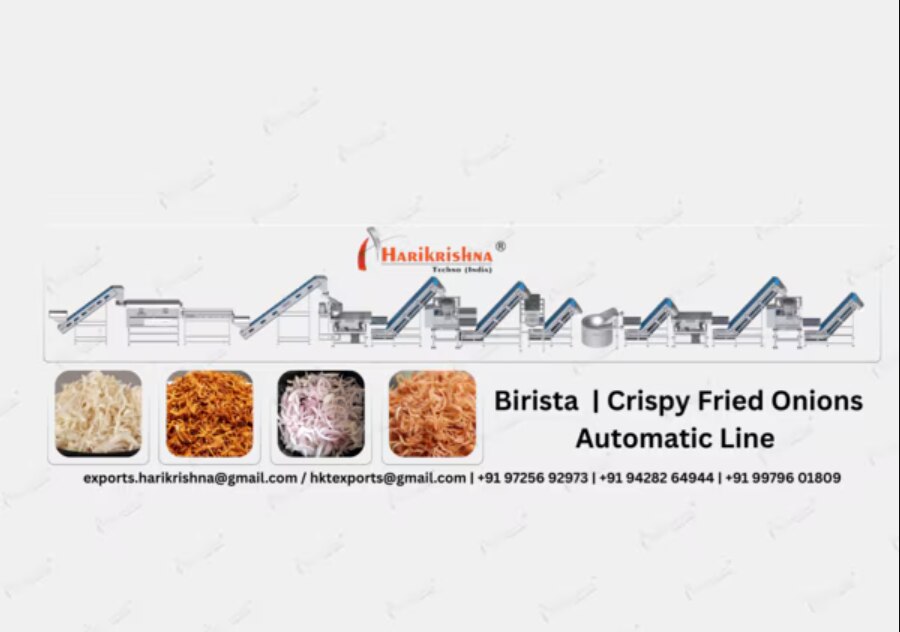
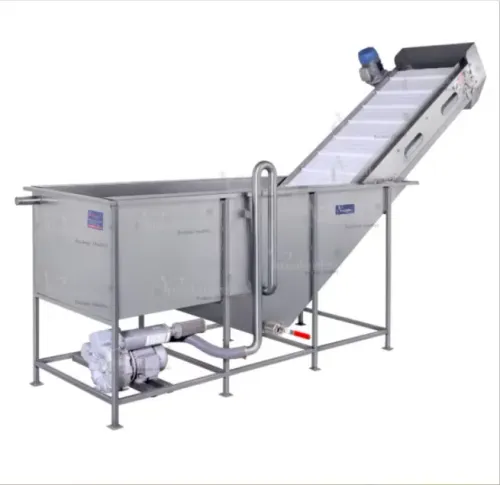
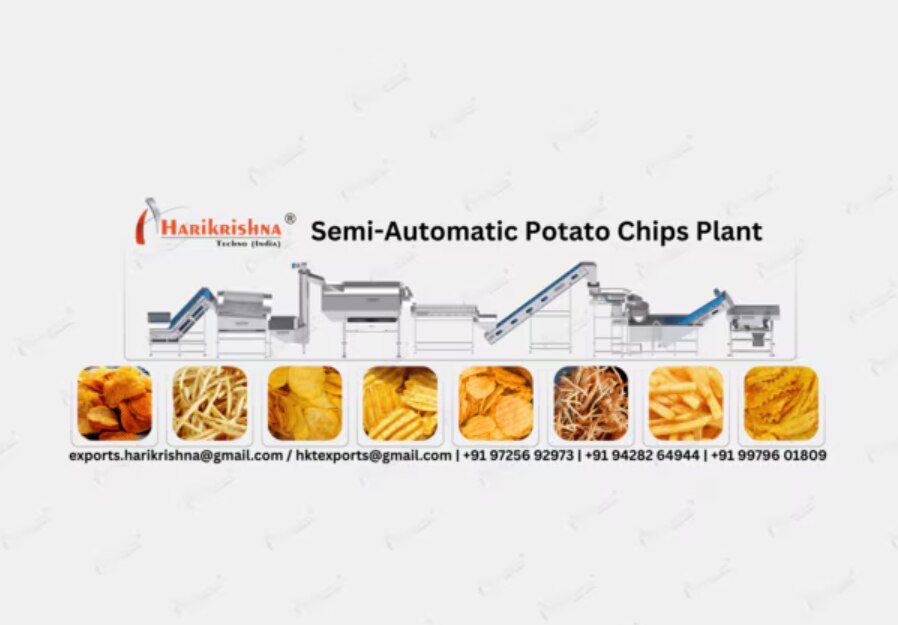
receiving hopper and grading → washing → brush peeling → inspection conveyor → slicing → blanching or anti-browning treatment, if validated → dewatering → continuous or batch frying → oil filtration → seasoning → cooling → weighing → packaging → finished-product conveying.
The quotation must name every machine separately, including elevators, transfer conveyors, pumps, oil tanks, filters, the control panel and safety devices. “Automatic line” is not enough.
Beside that flow, mark each application-dependent item:
- Blancher, water-treatment plant and wastewater equipment
- Nitrogen flushing, checkweigher and metal detector
- Boiler or thermic-fluid heater, compressor and exhaust system
| Quotation status | Items to identify | Buyer’s test |
|---|---|---|
| Base line | Hopper, grader, washer, peeler, inspection conveyor, slicer, dewatering unit, fryer, oil filter, seasoning, cooling, weigher, packer and conveyors | Every machine has a model, capacity and utility requirement |
| Conditional | Blancher, treatment plant, nitrogen flushing, checkweigher, metal detector, heater, compressor, exhaust and wastewater equipment | The supplier states when it applies and prices it separately |
| Commercial scope | Installation, commissioning, training, civil work, utility piping, freight, taxes and spare parts | Each appears as an inclusion or exclusion line |
This is the practical test for automatic potato chips plant inclusions in Gujarat: an offer naming only a slicer, fryer and packer is not a complete scope. Ask for the missing equipment and every excluded cost before comparing prices.
Make capacity mean finished chips, not raw-potato feed
Treat capacity in automatic potato chips plant details as finished product, not a flattering raw-potato number. Require the quotation to choose one basis: raw potatoes received per hour, sliced potatoes entering the fryer, fried chips leaving the cooling conveyor, or sealed packs per hour.
1. Make the supplier state the assumed potato variety, diameter range, operating hours per day, target slice thickness, final moisture and pack size. The quotation must show rated output in kg/h against that basis.
2. Demand a mass-balance trial recording kilograms received, peeled, sliced, fried, packed and discarded. Grading rejects, peel and trim loss, breakage, frying moisture loss, seasoning pickup and packing rejects mean nominal input never equals saleable output.
3. Require a sustained-output guarantee using your potatoes and packaging film, not a short empty-machine demonstration. State whether changing potato size alters slicer speed, fryer loading or finished-chip output.
Add these potato acceptance criteria to the technical schedule:
- Washed or unwashed input
- Size distribution and permitted diameter range
- Minimum dry-matter content
- Maximum reducing-sugar level
- Tolerance for green potatoes, eyes, rot and bruising
- Foreign-matter tolerance
Record the guaranteed result as packed chips per hour, with permitted reject rate and final moisture. A line that receives 1,000 kg of potatoes per hour might deliver far less in sealed packs after preparation, frying and packing losses. Without the mass balance and sustained trial, the capacity figure is not comparable between suppliers.
Check the slicer, peeler and pre-treatment specification
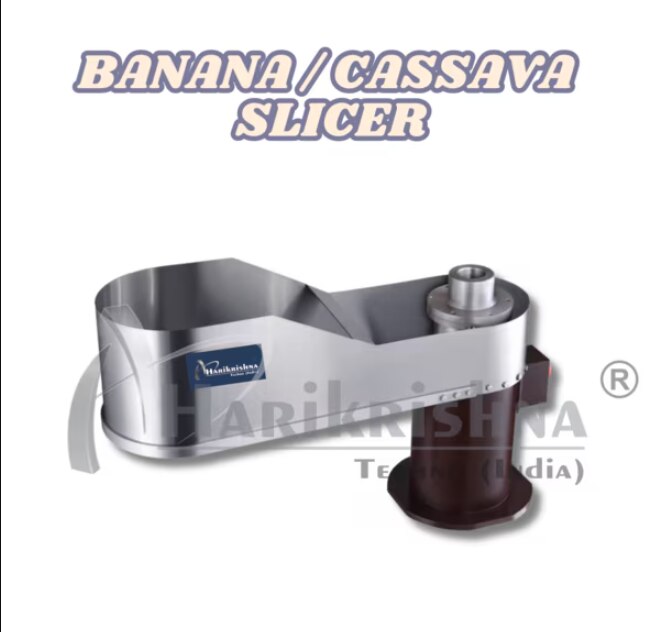
A slicer’s headline capacity does not prove good chips. Require automatic potato chips plant details that state adjustable slice thickness in millimetres, adjustment method, permitted thickness variation, knife material, cutting capacity, accepted potato diameter, spare-knife quantity and knife-changeover procedure. Uneven slices fry at different rates, causing mixed colour, moisture, oil uptake and breakage.
Ask for these preparation-stage figures:
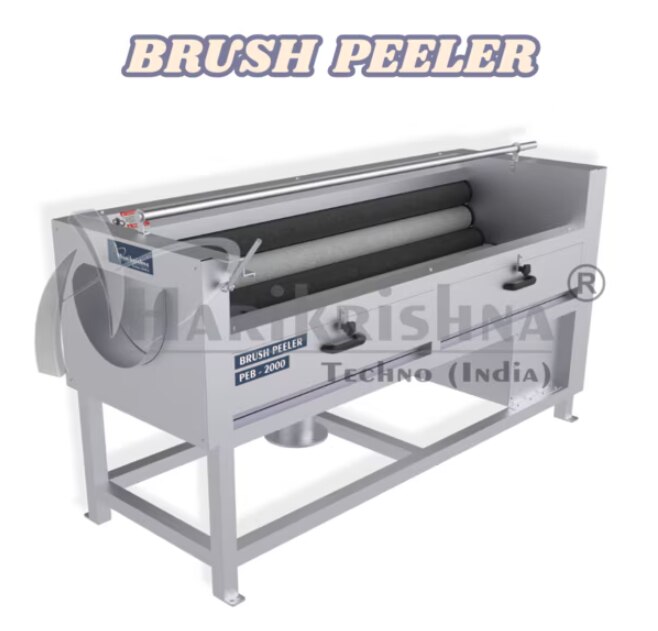
- Brush peeler: peel-loss percentage, water consumption, potato residence time, brush material, brush replacement interval and cleaning access.
- PEB-800 brush peeler: confirm whether it is included in the automatic line price or quoted as a separate machine.
- Blanching: treat it as a process decision, not an automatic inclusion. If proposed, require water temperature, residence time, water replacement or filtration, dewatering performance and the reason it suits the selected potato.
| Stage | Compare | Why it matters |
|---|---|---|
| Slicer | Thickness variation, knife life and diameter range | Variation changes frying time, colour, moisture and breakage; throughput alone is inadequate |
| Peeler | Peel loss, water use and residence time | Excess loss raises raw-potato cost; poor cleaning access increases sanitation effort |
| Blancher | Temperature, time, filtration and dewatering | Excess water reaches the fryer and disrupts oil temperature and quality |
Connect validation to potato variety, storage, reducing sugars, blanching, frying temperature and final moisture because each affects acrylamide. Request a trial using your potatoes, with measured colour, moisture and acrylamide results; reject a general promise of colour or low acrylamide. Confirm which potato chips plant equipment is included before comparing prices.
Compare fryer performance, utilities and site obligations
A fryer package is adequate only when its heat, oil and exhaust systems are specified together. The offer must state whether operation is batch or continuous, fryer dimensions, oil volume, heating method, installed heat load, temperature-control range and residence-time control.
| Fryer option | What to compare | What to require |
|---|---|---|
| Batch | Timed loading and unloading; variable product residence | Batch size, cycle time, recovery time and operator access |
| Continuous | Conveyor speed and constant oil loading | Belt width, residence-time adjustment and sustained output |
| Either | Oil and safety systems | Level protection, circulation, filtration, oil-loss control, emergency shutdown, cleaning access and fire protection |
A nominal capacity does not make automatic potato chips plant details comparable without heater, oil-filtration and exhaust specifications. Ask for the complete utility schedule, separating connected capacity from actual consumption:
- Three-phase voltage and frequency, connected load and maximum demand
- Compressed-air pressure and consumption
- Process-water flow, potable-water quality and heating-fuel or steam demand
- Exhaust volume, duct connection, drainage points and wastewater load
Require a water balance for soil, peel, starch-bearing wash water and cleaning discharge. The layout must identify screens, settling equipment, oil-waste handling, safe access, food-contact drainage and dedicated cleaning zones; otherwise drains and effluent systems can fail after production starts.
Before commissioning, verify the FSSAI licence category and Schedule 4 arrangements for sanitary design, potable water, pest control, personnel hygiene, cleaning and documented food-safety controls. Machinery supply alone proves none of these. These checks belong in the automatic potato chips plant inclusions in Gujarat, not as an afterthought.
Turn the potato chips plant quotation into a testable contract
A potato chips plant quotation becomes comparable only when every promise has a measurable pass or fail condition. List the packing line separately: multihead or linear weigher, vertical form-fill-seal machine, coder, checkweigher, metal detector and nitrogen-flushing system.
- Record pack-size range, weighing accuracy, bags per minute at each size, film structure, maximum film width, seal-jaw type, nitrogen flow and residual-oxygen target.
- Specify rejection logic for underweight packs and metal contamination.
- Name food-contact materials, certificates, gasket compounds, lubricant grades and packaging conformity documents under FSSAI Packaging Regulations.
- Add critical spares—slicer knives, bearings, seals, fryer-pump parts, heater components, sensors, thermocouples, load cells and sealing elements—and the local response time.
| Quotation figure | Contract requirement | Failure exposed |
|---|---|---|
| Output | Sustained bags per minute at each pack size | Short demonstration capacity |
| Product | Slice thickness, colour, oil-temperature stability, moisture and seasoning uniformity | Inconsistent frying or seasoning |
| Pack | Pack weight, seal integrity and reject rate | Leaks, giveaway or unsafe packs |
| Operation | Changeover and clean-down time | Hidden labour and downtime |
Factory acceptance testing must use your potatoes and packaging film, not an empty-machine demonstration. Record the test duration and pass limits, then state utility, film, oil and consumable assumptions.
The final potato chips plant quotation must define warranty exclusions, installation responsibility and remedies for missed output. HARIKRISHNA TECHNO (INDIA) belongs in the same comparison as any automatic chips plant manufacturer in Gujarat: compare documented scope and test results, not machine count.
Related products
 | AUTOMATIC POTATO CHIPS PLANT At Harikrishna Techno India, we understand that a perfect potato chip is a blend of quality ingredients and precision engineering. View product → |
 | SLICER Unlock Unprecedented Production with Our High-Capacity Slicer Machines At Harikrishna Techno India, we don't just build machines; we engineer... View product → |
Frequently asked questions
What equipment should an automatic potato chips plant include?
Map the complete flow from raw-potato intake through sorting, washing, peeling, slicing, pre-treatment, dewatering, frying, seasoning, cooling and packing. List conveyors, controls, utilities and safety systems for each step.
How should you compare potato chips plant capacity?
Compare finished chips per hour under a named potato variety, slice thickness, moisture target, oil temperature and operating schedule. Do not compare one supplier’s raw-potato feed rate with another supplier’s finished output.
Which potato chips plant specifications need checking before purchase?
Check slicer capacity and slice tolerance, peeler type, pre-treatment controls, fryer temperature range, oil filtration, heating method, utility consumption, cleaning access and required floor space.
What should a potato chips plant quotation include?
Require a line-by-line equipment schedule, capacities, materials, motor ratings, utility loads, exclusions, installation responsibilities, commissioning scope, spare parts, documentation and factory or site acceptance tests.
Related products
 | SLICER Model Po-3NV cutting machine is a crucial piece of equipment in the production of potato chips, designed to efficiently and consistently sliced... View product → |
 | SLICER Model Po-3CL cutting machine is a crucial piece of equipment in the production of potato chips, designed to efficiently and consistently sliced... View product → |
 | PEELER PEB-800 is a versatile food processing machine for washing, scrubbing, and peeling various root vegetables and fruits. View product → |
 | SLICER Model Po-3 cutting machine is a crucial piece of equipment in the production of potato chips, designed to efficiently and consistently sliced... View product → |
Keywords