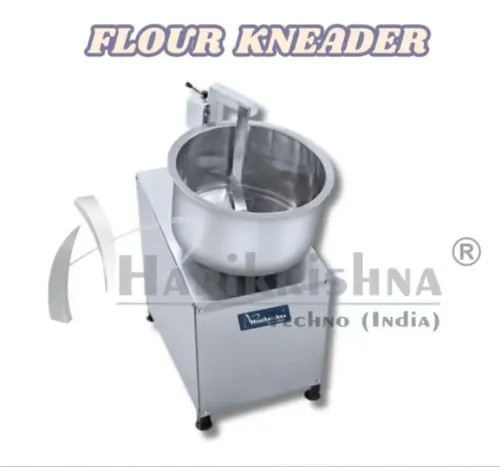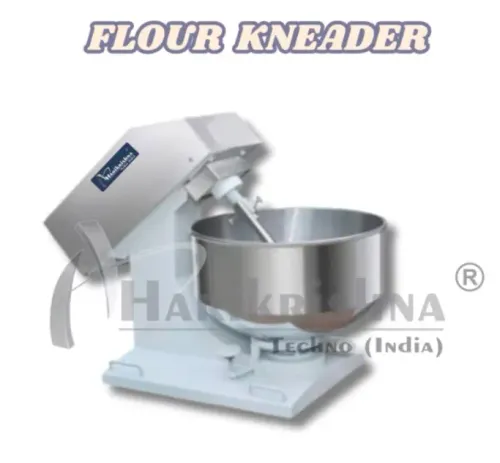
A small bakery can use a flour kneading machine profitably when its normal batch size, peak-hour demand, dough formulation and electrical supply match the machine. By checking flour charge against finished dough capacity, calculating real batches per hour and testing representative recipes, you can decide whether a kneader will reduce labour without creating waste, overheating or cleaning delays.
Key takeaways
- Size the kneader from peak-hour dough demand, not its flour rating.
- Match the mixer to dough hydration, batch size and product range.
- Require written specifications and witness a trial with your recipes.
- Check cleaning access, spare parts and response times before purchase.
Start with peak-hour demand, not the machine’s maximum capacity
If your busiest hour needs 90 kg of finished dough, a machine rated for 90 kg of flour is not automatically large enough. Flour weight excludes water and other ingredients, while finished dough weight includes flour, water, yeast, salt, sugar, fat and improvers.
Record these figures before comparing a flour kneading machine for small bakery in Rajkot:
- Largest normal batch, not the occasional oversized batch
- Finished dough required during the peak hour
- Usable batches per hour
- Minutes for loading, mixing, unloading, dough recovery and bowl sanitation
- Minimum and maximum flour-load range for your actual recipe
| Capacity wording | What it means | How to use it |
|---|---|---|
| Rated flour charge | Flour placed in the bowl or trough | Compare with your recipe’s flour weight |
| Finished dough capacity | Total dough after liquids and ingredients are added | Compare with delivery and production demand |
| Bowl volume | Physical space, not a guaranteed dough load | Never use it alone for sizing |
Ask the supplier to state both rated flour charge and finished dough capacity in writing. Your useful batch is the normal batch: very small loads may fail to contact the tool, while maximum loads can overload the motor, gearbox and bearings.
Calculate usable batch size × completed batches per hour. For example, 30 kg × 3 equals 90 kg of dough per hour only if the full cycle fits that hour. Then subtract labour, electricity, maintenance and idle-time costs from the extra sales margin.
A flour kneader for small business is profitable only when it meets peak demand without spending most of the day underloaded.
Match the kneader to the doughs your bakery actually sells
A stiff atta dough can demand more torque than the same flour weight in a white, high-hydration dough. Sugar and fat in buns also lengthen mixing and load the tool, so match the machine to the recipe, not kilograms of flour alone.
| Option | Best fit | Main trade-off |
|---|---|---|
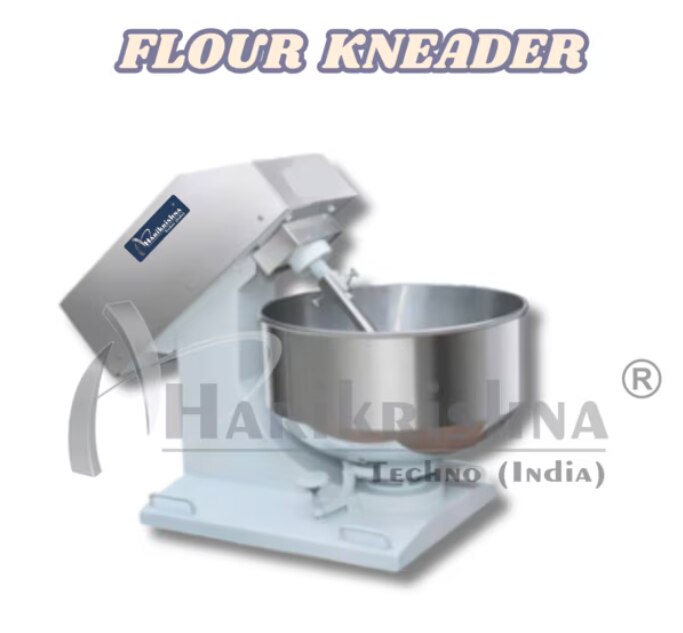
| L-type flour kneader | Atta, naan, bread, pizza, buns and other yeast doughs; regular medium or large batches | Strong folding action and simple construction, but less flexible for batters, creams and delicate pastry |
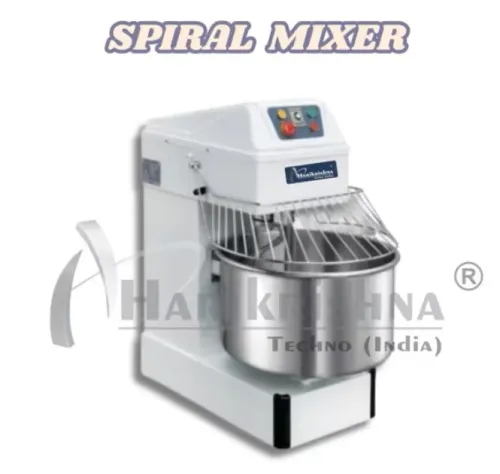
| Spiral mixer | Wheat bread, pizza and high-hydration yeast dough; consistent production batches | Usually develops dough efficiently, but costs more and can take longer to clean around the spiral and bowl |
| Planetary mixer | Batters, creams, khari or pastry work, enriched dough and small batches | Multiple attachments add flexibility, but do not guarantee efficient bread development; dough may climb the hook or mix slowly |
| Hand kneading | Occasional recipe tests and very small batches | Lowest equipment cost, but inconsistent results and high labour time at production volume |
Compare an L-type bakery flour kneader in Rajkot with a spiral mixer using your wheat recipe. Check whether the L-tool folds and gathers dough consistently, whether the spiral gives faster gluten development, how evenly each batch mixes, and how easily flour and sticky dough can be removed.
Neither is a good choice for cake batter or whipped cream.
A dough kneading machine for bakery production suits you when normal bread, pizza, naan or bun batches fill its working range. Keep hand kneading for trials; choose a planetary mixer when pastry, batters and creams make flexibility more valuable than dedicated bread throughput.
Demand a written specification and a witnessed recipe trial
Do not accept “capacity” as a bowl-volume claim. A quotation for commercial bakery kneading equipment must state both rated flour charge and finished dough capacity, because those figures are not interchangeable.
1. Require the supplier to list motor power, motor type, mixing-tool speed, mixing time, output per hour and the test conditions behind that output. Also request bowl or trough dimensions, machine dimensions, net weight, food-contact material, installation space, noise level, discharge method and access for cleaning.
2. Match voltage, frequency, single-phase or three-phase supply, rated current, starting current, earthing, overload protection and restart behaviour to your Rajkot connection. Motor horsepower alone does not prove reliable starting.
3. Run a witnessed trial using your own flour and recipe. Record batch weight; time at each speed; final dough temperature; gluten development; motor current or overload events; residue; discharge time; noise; and cleaning time. Poor small-batch pickup or a difficult discharge will not appear in a catalogue.
4. Test warm-weather controls. Use measured-temperature or chilled water, shorten mixing cycles when development is complete, and confirm speed control can protect the recipe’s final dough temperature. Excess heat accelerates fermentation and changes proofing time.
5. Write every result into the purchase specification for the bakery flour kneader in Rajkot. Reject an output figure that excludes loading, unloading, dough recovery or sanitation, because nominal mixing time is not completed batches per hour.
Use a controlled loading, mixing and cleaning workflow
A dough kneading machine for bakery production gives consistent results only when staff control ingredients, temperature, loading and cleaning in the same order each batch.
1. Weigh flour, water, yeast, salt, sugar, fat and improvers separately. Confirm the recipe’s target dough temperature and calculate whether the water needs chilling or measured-temperature control.
2. Inspect the clean bowl or trough, shaft, kneading tool, scraper and discharge area. Reject the machine if you find dried dough, damaged surfaces, loose parts or hidden residue.
3. Load ingredients in the tested recipe order. Add measured water gradually when the formula requires it; uncontrolled pouring changes hydration and can overload the drive.
4. Fit the guard, confirm that the emergency stop is accessible, and start at low speed. Move to development speed only after the ingredients have combined.
5. Stop at the recipe’s mixing time or dough condition, not clock time alone. Check stretch, surface smoothness and resistance, then confirm development with the recipe’s dough test; appearance by itself is not proof of gluten development.
6. Measure final dough temperature before unloading. Warm Rajkot conditions and high-speed mixing can shorten fermentation, so adjust water temperature or mixing time before the next batch.
7. Stop, isolate and prevent unsafe restart before scraping or removing dough. Never reach through a guard while the tool moves.
8. Clean and inspect the bowl, shaft, tool, scraper, discharge zone and concealed dough traps after production. Smooth, cleanable food-contact construction supports FSSAI hygiene duties; use ISO 12100 for risk assessment and EN 453 for dough-mixer safety.
Make serviceability part of the final purchase decision
A cheaper flour kneader for small business can cost more when a failed belt, seal, bearing, contactor, overload relay or gearbox leaves it idle. Ask who services each part, whether replacements are stocked in or near Rajkot, the visit response time, required lubrication, and whether the bowl, shaft and tool can be repaired locally.
| Locally supported | Cheaper specification |
|---|---|
| Warranty duration, installation and operator training are written | Warranty and training are unclear |
| Parts and service response time are stated | Proprietary parts require long shipping |
| Lubrication points and written exclusions are clear | Maintenance duties are vague |
| Recipe trial uses your wheat, hydration, sugar, fat and target temperature | Capacity is accepted from catalogue figures |
| Cost is calculated per usable batch, including downtime | Purchase price dominates the decision |
For a flour kneading machine for small bakery in Rajkot, ask HARIKRISHNA TECHNO (INDIA) to state actual flour and finished-dough capacities, motor, phase, voltage, dimensions, weight, speed, mixing time and output per hour in writing. Run your recipe and daily batch schedule, counting loading, mixing, unloading, recovery and cleaning.
Commercial bakery kneading equipment earns its place when normal loads mix cleanly within peak-hour demand and the service plan protects uptime; choose a different mixer when the product range or batch size falls outside that trial.
Related products
 | FLOUR KNEADING MACHINE Our Flour Kneading Machine is designed for efficient and consistent dough preparation. View product → |
 | FLOUR KNEADING MACHINE This L-Type Flour Kneading Machine is designed for efficient and consistent dough preparation, with a specialized function for besan products. View product → |
Frequently asked questions
How should a small bakery size a flour kneading machine?
Calculate the finished dough needed during your busiest hour, then separate flour capacity from total dough capacity. Water, yeast, salt, sugar, fat and improvers add weight beyond the flour rating.
What should you compare when choosing a bakery flour kneader in Rajkot?
Compare the machine’s working batch range, dough hydration limits, mixing speed, bowl and tool design, motor rating, electrical supply and suitability for the doughs you sell.
Why request a witnessed recipe trial before buying a dough kneading machine?
A trial shows whether your actual recipes mix evenly, develop the required dough strength and discharge cleanly at the planned batch size. Record the recipe, ingredient weights, mixing time and result.
What service details matter when buying commercial bakery kneading equipment?
Confirm cleaning access, food-contact materials, lubrication points, warranty terms, spare-part availability and the technician’s response process. Ask who will support the machine after installation.
Related product
 | FLOUR KNEADING MACHINE Spiral Mixer The Spiral Mixer is an essential machine for dough preparation, designed for efficiency and durability. View product → |
Keywords