The right birista fryer depends on finished kilograms per hour, not a supplier’s fresh-onion capacity or the word “circular” on a quotation. You will be able to match the fryer design to your onion quality, floor space, labour, utilities and budget, then test competing machines against measurable production results.
Key takeaways
- Choose batch frying for variable onion moisture and tighter colour control.
- Choose a circular fryer for sustained output and lower labour per kilogram.
- Specify slice thickness, moisture, dewatering and target colour before requesting quotations.
- Accept the machine only after testing output, oil temperature and finished crispness.
Choose by Finished Output, Floor Space and Labour
Choose a batch fryer when you need tight colour control, have variable onion moisture or slice thickness, and can assign operators to loading, timing and unloading. Choose a continuous circular fryer when finished output must remain high through a long shift, labour per kilogram matters, and you can standardise dewatering and slicing.
The phrase circular fryer or batch fryer for fried onion in Rajkot is incomplete until the supplier states whether “circular” means a circular-pan batch unit, a rotary conveyor fryer, or only oil recirculation.
| Option | Best fit | Main trade-off |
|---|---|---|
| Batch fryer | Small to medium finished birista output, limited floor area, variable onion lots, close operator control | More handling and lower labour productivity |
| Continuous circular fryer | High finished kg/h, long shifts, standardised onion preparation and steady demand | Needs consistent feeding, more line space and closer crumb filtration |
| Either design | Existing line with peeling, washing, slicing, dewatering, frying, draining or centrifuge drying, cooling, inspection and packing | Capacity depends on the complete line, not the fryer label |
Base the commercial onion fryer comparison on finished birista kg/h, not fresh-onion feed. Yield changes with variety, slice thickness, sugar, moisture, damaged slices and final crispness, so a feed-rate claim can overstate saleable output.
- Available length, width, maintenance clearance and floor loading
- Operator numbers per shift and acceptable manual lifting
- Three-phase power, burner or thermic-fluid supply, exhaust, make-up air, drains and wash water
- Oil filtration capacity and filter-cleaning time; burnt fine crumbs create dark specks, foam and false heater readings
A short demonstration proves little. Test both designs with your onion and normal slice specification for a full production run.
Define the Fryer Before Comparing Quotations
A “circular fryer” is not a complete machine definition. In Rajkot quotations, it can mean a circular-pan batch fryer, a rotary or circular conveyor fryer, or a fryer with recirculated oil. A birista production fryer must be identified by its operating method, not its shape.
| Option | What it means | Fit in the line |
|---|---|---|
| Circular continuous fryer | Onion travels through a circular path while oil is heated, circulated and filtered | Suits steady, relatively high output when slice and moisture variation stay within a narrow range |
| Circular-pan batch fryer | A measured onion load fries in one vessel, then operators discharge it | Gives batch control without proving continuous operation |
| Batch fryer | Each load has a defined weight, frying time and discharge point | Offers tighter colour control, but requires standardised loading, timing and draining |
Require these details before comparing prices:
1. Obtain a process drawing showing receiving, peeling, washing, slicing, dewatering, frying, oil draining or centrifuge drying, cooling, inspection and packing. Mark the onion path, oil volume, agitation method and residence time.
2. Confirm whether the quoted unit is batch or continuous. A circular vessel does not automatically mean continuous frying.
3. Treat cooling as part of the fryer line. Packing warm birista traps steam, softens crisp onion and can create condensation, so the specification must state product-temperature and moisture targets.
4. Compare connected electrical load, burner or thermic-fluid demand, exhaust volume, make-up air, floor loading, drains, wash water and three-phase supply against the Rajkot site. A short demonstration cannot reveal oil-temperature drift, discharge darkening or end-of-shift deterioration.
Set Onion Specifications Before Setting the Frying Recipe
A fryer recipe is transferable only when the onion feed is defined. State bulb variety, average bulb size, sugar level, moisture, slice thickness, slice length, and the percentage of damaged or doubled slices before quoting capacity.
A fried onion frying machine in Rajkot must be rated in finished birista kg/h, not only fresh-onion feed kg/h; yield changes with these inputs and with the required crispness.
| Variable | What to specify | Frying consequence |
|---|---|---|
| Bulb variety and sugar | Name the variety and record sweetness by lot | Higher sugar colours faster and can burn before the centre crisps |
| Slice thickness | Target a narrow band, such as 1.5–2.5 mm | Thick slices need longer residence; thin slices darken quickly |
| Slice length and damage | Set a length range; remove doubled, crushed and split slices | Uneven pieces produce mixed colour and uneven moisture |
| Moisture | Record incoming moisture and lot variation | Wetter onion consumes more frying time and lowers effective oil temperature |
| Surface water | Define the dewatering method and maximum water carryover | Excess water causes foaming, splashing, oil degradation and apparent under-capacity |
Use a pilot recipe near 145–165°C, then set residence time against final colour and residual moisture. Do not copy one temperature between lots: a wetter load needs different timing.
- Standardise washing, dewatering, loading weight and drain time.
- Choose tighter batch control when onion lots vary; use circular continuous frying only with consistent slices and feed.
- Specify finished birista moisture, colour target and crispness, not just fresh feed rate.
Control Colour, Crispness and Oil Quality in Daily Production
Set the discharge colour, not the colour in the oil, as your control point. Onion keeps darkening while oil drains and the birista cools; loading a dark product creates bitter edges. Establish a retained reference sample at final temperature and release each run against that sample.
- Record slice thickness, dewatered onion weight, oil temperature at loading, recovery time, frying time, drain time and finished yield on every batch sheet.
- Keep the batch load and usable oil-to-product ratio fixed. Overloading causes a sharp temperature drop and longer frying; underloading can brown onion near the heated zone.
- In a batch fryer, start the timer at the same process point every run and discharge at the validated lighter colour. Standardise loading depth and draining time.
- For a circular fryer for birista, verify residence time from feed to discharge and check samples from the beginning, middle and end of the path. Uneven residence time produces pale centres and dark discharge product.
- Remove crumbs at the defined interval and inspect oil for foaming, smoke, darkening and stale odour. Record oil consumption and use a fryer-oil test method with written replacement limits.
- Cool a fixed sample quantity for the same time before judging crispness. A hot sample can feel crisp while retaining moisture that softens after packing.
Review rejected kilograms, colour variation, energy use and operator count at shift end. If crispness changes while colour matches, investigate dewatering, drain time and cooling airflow before raising the frying temperature.
Compare Rajkot Machines with a Measured Acceptance Test
Require a witnessed acceptance test before you order a fried onion frying machine in Rajkot. The supplier must use your onion variety, slice thickness, dewatering method and target crispness, not preprocessed demonstration material. Demand finished birista kg/h, not fresh-onion feed rate; moisture loss, oil uptake and rejected slices can make the saleable output far lower.
A “circular fryer” can mean a circular-pan batch unit, a rotary conveyor fryer or simply a fryer with oil recirculation. Request a process drawing before comparing quotations.
| Check | Continuous circular fryer | Batch fryer |
|---|---|---|
| Operating basis | Onion moves continuously; residence time and oil level must remain stable | Measured loads receive a set frying time |
| Best acceptance measure | Finished kg/h over a full production run | Finished kg per batch, batch interval and hourly average |
| Main risk | Oil temperature drift, crumb accumulation and uneven residence time | Labour delays and colour variation between loads |
| Ask about filtration | Screen or mesh size, continuous removal and heater protection | Crumb removal between batches and filter-cleaning time |
Your acceptance sheet should record:
- Finished birista kg/h, colour variation, rejected product and operator count
- Oil consumption, energy consumption, temperature recovery time and end-of-shift oil condition
- Connected electrical load, three-phase supply, burner or thermic-fluid demand, exhaust volume, make-up air, floor loading, drains and wash-water requirement
- Slice loading, residence time, oil volume and filtration performance
For a useful commercial onion fryer comparison, ask HARIKRISHNA TECHNO (INDIA) to state these figures on the quotation and installation drawing, rather than accepting “high capacity” as a specification.
Related products
 | Birista Plant At Harikrishna Techno India, we offer a comprehensive and fully automated solution for the production of perfect birista (crispy fried onions). View product → |
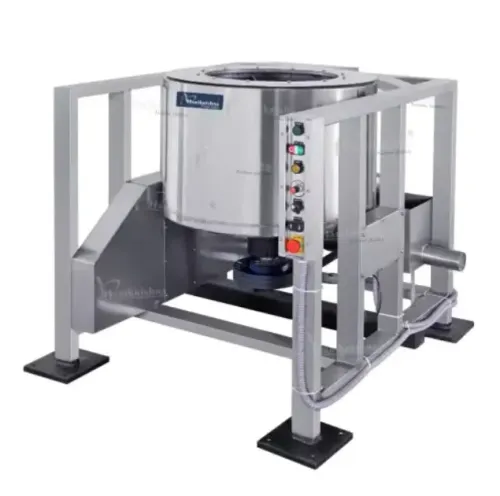
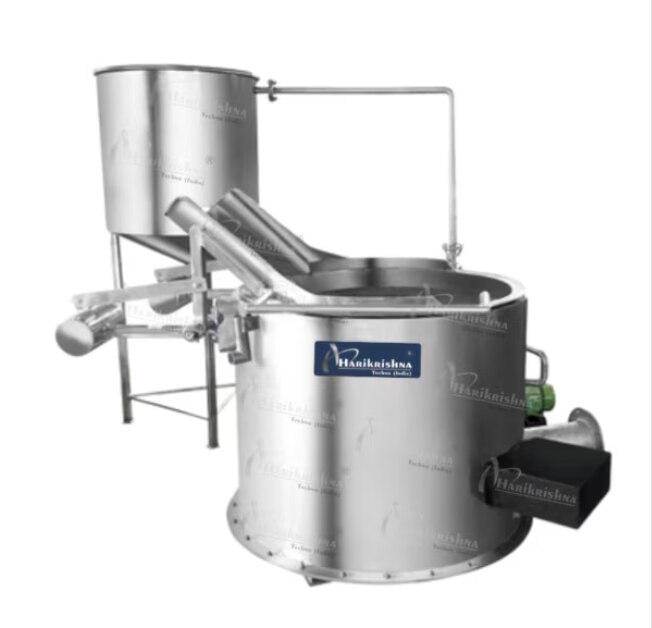
 | FRYER Circular fryers come in various sizes with filtration systems and high production capacities. View product → |
Frequently asked questions
Should you choose a circular fryer or batch fryer for fried onion production in Rajkot?
Choose a batch fryer when onion moisture or slice thickness varies and you need tight colour control. Choose a circular fryer when you need sustained output through a long shift and can standardise slicing and dewatering.
What should you define before comparing birista fryer quotations?
Define finished output, floor space, labour availability, fryer type, heating system, oil capacity, loading method, filtration, discharge arrangement and the acceptance-test measurements.
Which onion specifications affect a fried onion frying machine?
Set the onion variety, bulb size, slice thickness, slice shape, surface moisture after washing, dewatering method and target finished colour before setting the frying recipe.
How do you control colour, crispness and oil quality in birista production?
Record oil temperature, frying time, feed rate, slice thickness and finished moisture. Remove crumbs through filtration, monitor oil condition and keep loading consistent.
How should you test a circular or batch fryer before accepting it?
Run the machine with your own onions and recipe, then record kilograms per hour, oil temperature, frying time, finished colour, crispness, oil uptake, reject rate and operator count.
Keywords