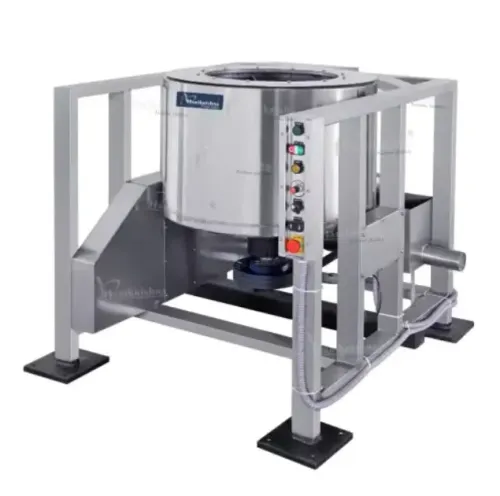
An online model name is not enough to establish either the purchase price or the machine’s real capacity. You will be able to request a comparable quotation, verify local availability, and judge the PEB-800 against your produce, utilities, floor space, and yield limits.
Key takeaways
- Request a dated quote listing taxes, delivery, warranty, and included accessories.
- Confirm stock, dispatch time, installation support, and a local product trial.
- Match throughput, brush configuration, water use, and power supply to your plant.
- Test peeling with your actual produce size, variety, and surface condition.
What the PEB-800 Price in Rajkot Should Include
A quoted PEB-800 brush peeler price in Rajkot is not the final cost until the supplier identifies exactly what is included. An online listing cannot establish a current ex-works or delivered price for a specific machine, so request a dated quotation with model, quantity, taxes, delivery location, and validity period.
Confirm these items in writing before comparing offers:
1. State whether the amount is machine-only, delivered-and-installed, or part of an integrated line. Add GST, freight to Rajkot, unloading, foundations, electrical cabling, water and drainage work, commissioning, operator training, trial material, and warranty coverage.
2. Check the electrical scope: motor rating, connected load, voltage, phase, starter or variable-frequency drive, overload protection, emergency stop, guarding, and control-panel enclosure rating. A quote excluding the panel or VFD is not comparable with a complete installation.
3. Ask for water consumption, inlet size, drain arrangement, wastewater solids handling, spray bar, recirculation equipment, and any external effluent system. Missing drainage work can turn a low peb 800 brush peeler price in Rajkot into a higher installation bill.
4. Price the running parts separately: brush replacement interval, brush-set cost, crop-specific hardness options, bearing and shaft maintenance, water use, electricity, cleaning labour, and product loss. Include initial spare brushes and delivery lead time.
5. Require acceptance-test figures using your crop and size range: kilograms per hour, peel removal, product loss, broken pieces, and residual skin. A headline capacity without test conditions does not prove usable output.
How to Verify Stock, Lead Time, and a Local Trial
A “brush peeler available in rajkot” is not necessarily sitting in a Rajkot warehouse. Treat the claim as unverified until the seller identifies the machine’s build status, dispatch location, and service responsibility in writing.
- Ask for the machine serial number, nameplate photograph, current location, and a statement confirming “ready stock,” “under manufacture,” or “supplied through distributor.” A serial number with no physical machine, or a vague “available soon” answer, does not prove stock.
- For a made-to-order PEB-800, obtain the production start date, promised readiness date, dispatch date, and conditions that could extend the schedule. Ask whether the quoted lead time includes testing, packing, and transport to Rajkot.
- For distributor supply, record the principal manufacturer, distributor’s legal name, dispatch warehouse, installation coverage in Rajkot, and the party responsible for warranty calls, spare brushes, bearings, and breakdown service.
- Arrange a witnessed trial using your own potatoes, carrots, beetroot, or other target crop. Record batch weight, crop size, water flow, running time, output weight, visible peel remaining, product loss, and brush condition.
Do not accept a trial with a different brush set or a carefully selected sample. Ask for the machine’s brush material and hardness, replacement cost, and lead time before approving the PEB-800. Make the seller state who will install it, train operators, and respond if the machine arrives late or fails the agreed trial.
Specifications That Decide Whether PEB-800 Fits Your Plant
“800” is not a complete purchasing specification: confirm whether it means 800 kg/h, a machine dimension, or a model series before comparing a root vegetable peeler PEB 800 with another machine. Capacity changes with crop, tuber size, soil load, residence time, peeling target, and permitted product loss.
Obtain these figures in writing:
- Throughput for potatoes, carrots, beetroot, or your actual crop, stated with variety, size range, kilograms per hour, peel-removal percentage, residual skin, broken pieces, and product loss from a witnessed trial.
- Brush material, diameter, speed control, hardness options, abrasive elements, replacement interval, brush cost, stock lead time, and shaft-bearing lubrication or replacement requirements.
- Motor rating, voltage, phase, frequency, full-load current, water-consumption range, inlet size, drain size, wastewater solids handling, spray-bar or recirculation equipment, and external effluent items excluded from the quote.
- Footprint, operating height, loading height, discharge height, machine weight, service clearance, access for brush removal, and floor loading.
| Specification | Obtain | Why it decides fit |
|---|---|---|
| Machine | Brush count, dimensions, speed, trial capacity | Determines finish and loss |
| Hygiene | Contact-metal grade, weld finish, fastener and guard materials | “Stainless body” alone proves little; specify SS 304 or SS 316 |
| Utilities | Power, water, drain and solids handling | Prevents an undersized supply or blocked drain |
| Layout | Footprint, clearances, loading and discharge heights | Confirms line and cleaning access |
Ask for the cleaning method, dismantling time, and cleanable dead-space details. Brush wear, water, electricity, cleaning labour, bearings, and rejected product can outweigh the purchase price.
How Produce Conditions Change Peeling Results
A PEB 800 brush peeler can meet its nominal capacity yet waste edible product on small, soft, or heavily soiled roots. Test it with your actual variety, size distribution, soil load, water flow, residence time, and peeling target; record kilograms per hour, peel removal, product loss, broken pieces, and residual skin.
- Load a consistent batch, start water flow, and adjust feed rate before judging performance. Overloading leaves skin behind; excessive residence time increases loss.
- Inspect the discharge for unpeeled patches, gouging, broken pieces, and wet buildup. Repeat the trial with both clean and soil-covered produce if those conditions occur in production.
- Define acceptance limits for throughput, edible-product loss, skin carryover, water use, vibration, noise, and clean-down time. A supplier can meet a headline figure while failing your yield requirement.
- Price brush wear into the decision: confirm brush hardness or crop-specific sets, replacement interval, brush cost and lead time, shaft-bearing maintenance, electricity, water, and cleaning labour.
| Option | Best fit | Main compromise |
|---|---|---|
| Brush peeler | Loosened skin and a smooth finish on potatoes, carrots, or beetroot | Brush wear and higher loss when overloaded |
| Abrasive peeler | Fast, aggressive removal where yield matters less | Rougher finish and greater product loss |
| Blade peeler | Controlled, uniform cuts on suitable produce | Needs consistent size and sharper maintenance |
| Manual labour | Small batches or irregular shapes | Slow, labour-intensive, and inconsistent |
| PEB2000 | Higher volume or a longer peeling duty | Larger investment, utilities, and footprint |
Choose the PEB 800 brush peeler when the trial meets your loss limit and finish specification, not because its model number suggests capacity.
A Practical Rajkot Buying Checklist for PEB-800
Put every promise in the purchase order before you buy peb 800 machine; an online listing is not a complete commercial offer.
1. State the price basis: machine-only, delivered and installed in Rajkot, or integrated-line supply. Add GST, freight, unloading, foundation, electrical cabling, water and drainage work, trial material, operator training, commissioning, initial spare brushes, and warranty.
2. Define acceptance testing using your actual crop, size range, feed rate, operating water flow, target throughput, peeling-loss limit, and acceptable surface finish. Record the test result, rejection conditions, and who pays if the machine fails.
3. Attach a line-integration drawing showing inlet and discharge heights, interface dimensions, belt speed, product orientation, drainage, guarding, and control signals for the washer, inspection table, cutter, blancher, dryer, or fryer. A standalone peeler is not automatically plug-compatible.
4. Write down connected load, motor rating, voltage, phase, starter or VFD, overload protection, emergency stop, guards, panel enclosure rating, and product-contact steel grade. “Stainless steel body” is insufficient; identify SS 304 or SS 316 for contact parts, welds, fasteners, shafts, and guards.
5. Price the operating year, not only the machine: brush cost and replacement interval, crop-specific brush options, bearing maintenance, water, electricity, cleaning labour, and product loss. Request spare-part prices and lead times.
6. Specify response time, installation responsibility, training, warranty exclusions, preventive-service visits, and local escalation. HARIKRISHNA TECHNO (INDIA) should provide these points in the dated quotation, not leave them to verbal assurance.
Related product
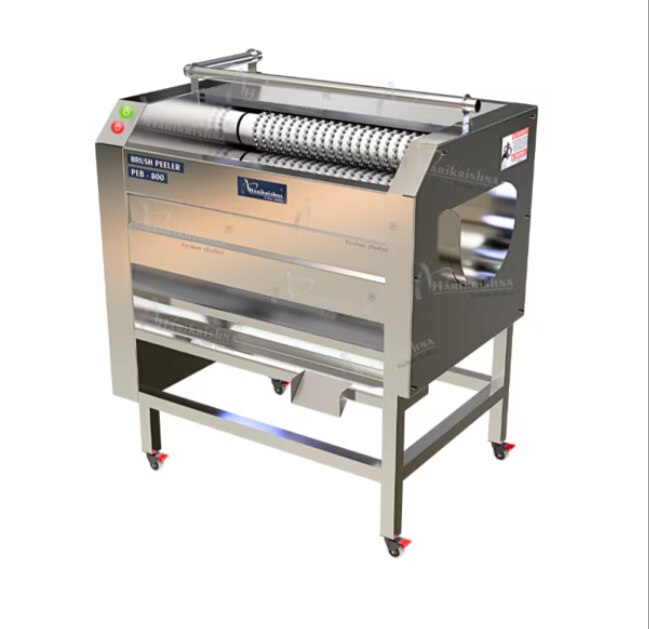
 | PEELER PEB-800 is a versatile food processing machine for washing, scrubbing, and peeling various root vegetables and fruits. View product → |
Frequently asked questions
What should a PEB-800 brush peeler quotation in Rajkot include?
Ask for the model, quantity, machine configuration, included accessories, taxes, freight to your site, installation, warranty, delivery date, and quote validity period.
How can you verify whether a PEB-800 is available in Rajkot?
Ask the supplier to confirm whether the machine is physically in stock, ready for dispatch, or built to order. Request the expected dispatch date, lead time, installation schedule, and a local trial using your produce.
Which specifications determine whether the PEB-800 fits a processing plant?
Compare required throughput with the machine’s rated capacity, then check brush arrangement, peeling method, power supply, water consumption, discharge height, footprint, construction material, cleaning access, and controls.
Why do produce conditions affect brush-peeling results?
Potato or root-vegetable variety, size range, surface moisture, dirt load, storage condition, and temperature change the peeling rate and product loss. Test representative batches before approving the machine.
Keywords