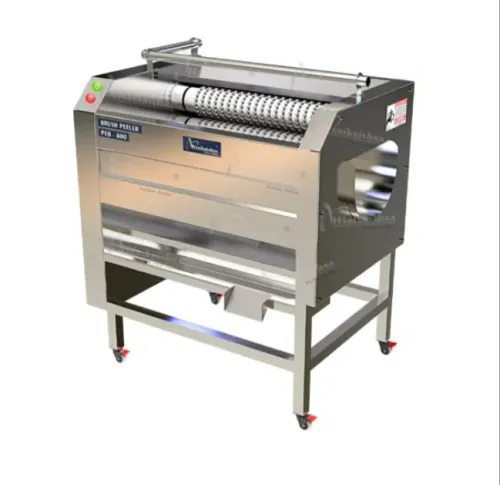
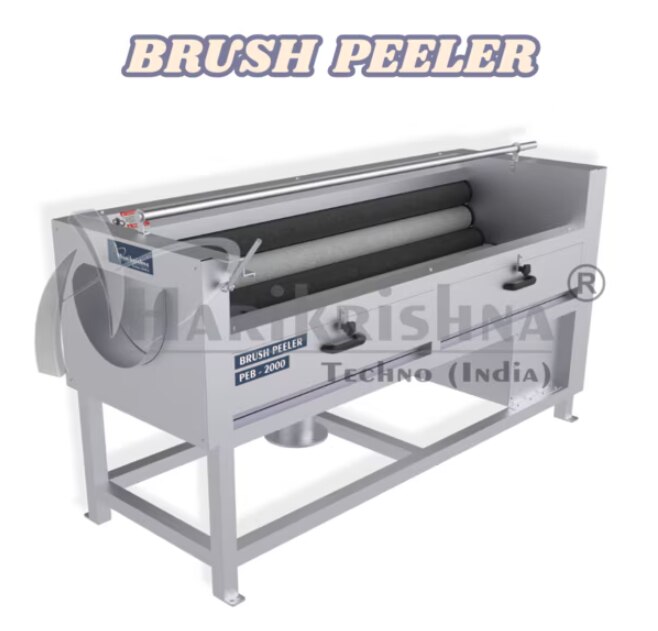
A brush peeler can remove loose onion skin before slicing, but birista quality depends on much more than nominal peeling capacity. You will be able to judge machine fit, compare peeling methods, specify an onion trial and decide whether the equipment improves saleable fried-onion output.
Key takeaways
- Use a brush peeler for dry, adherent onion skin and higher peeling throughput.
- Measure skin removal, onion loss and frying yield during a controlled trial.
- Compare brush peeling with manual, abrasive and knife-based peeling methods.
- Reject the investment when onion sizes, skin condition or volumes vary too widely.
When does a brush peeler suit onions for birista production?
A brush peeler suits birista onions when suppliers deliver adherent, dry outer skin and manual peeling is limiting labour or throughput. It is one stage of birista production equipment, not a complete fried-onion solution: the line still covers receiving and grading, topping and tailing, washing, slicing, dewatering, frying, oil draining or centrifuging, cooling and packing.
Prepare incoming bulbs in this order:
1. Remove stones, metal and heavy soil during receiving inspection. These contaminants damage brushes, pumps and slicers.
2. Grade onions by diameter so the peeler receives a more consistent load. Mixed sizes produce uneven skin removal.
3. Reject rotten or split bulbs. They spread contamination and break apart during brushing.
4. Remove loose outer skin before feeding the machine. Top and tail where the product specification requires root and stem removal.
5. Pre-wash when the soil load demands it, then control the water and drainage before peeling.
6. Inspect peeled bulbs before slicing. A brush peeler does not normally size onions, trim roots and stems, slice, or fry them.
A brush peeler adds less value when bulbs arrive cleaned and trimmed, or when the plant handles small, irregular batches. The basic fit test for a brush peeler for fried onion producers in Rajkot is a repeatable onion supply, enough volume to justify mechanisation, and a plan for peel, wash water and dewatering.
Do not use one setting year-round. Rajkot suppliers can deliver onions with different curing, skin dryness, soil load and bulb sizes across seasons; adjust brush contact, feed rate and cleaning controls accordingly.
Will brush peeling remove enough skin without reducing frying yield?
A commercial brush peeler can produce bulbs clean enough for slicing and frying, but only within a controlled yield limit. Weak contact leaves skin patches that become dark flakes in fried onion; excessive pressure or residence time removes edible flesh, breaks layers and lowers saleable yield.
1. Test the variables that change peeling: onion variety, bulb diameter, curing and skin dryness, soil load, moisture, harvest age and mixed batch sizes. An onion peeling machine in Rajkot adjusted for large, dry bulbs may damage freshly harvested, small or mixed-size onions.
2. Inspect peeled bulbs for visible skin, bruising, broken layers and rejected bulbs. Then inspect sliced onion, because skin hidden on a whole bulb becomes easier to see after cutting. Record percentage of bulbs with visible skin, edible flesh loss, damaged-bulb rate and saleable sliced-onion weight.
3. Choose dry peeling when avoiding process water matters; provide dust extraction or an enclosure, and expect tightly attached skin to remain. Wet brush peeling suppresses dust and loosens skin, but adds wastewater and surface moisture. Drain or dewater thoroughly, because residual water increases frying foaming and splashing.
4. Define brush adjustment, cleaning and replacement criteria before purchase. Worn brushes change contact intensity and can shift a passing batch into under-peeling or flesh loss. Repeat the trial across seasonal supplies, not just one uniform lot, and judge accepted fried-onion output rather than peeling speed alone.
How does a brush peeler compare with other onion-peeling choices?
A birista line needs peeling that matches onion condition, labour limits and acceptable flesh loss. These options are not interchangeable.
| Option | Main action | Best fit | Main trade-off |
|---|---|---|---|
| Manual peeling | Removes skin by hand | Low volume, frequent product changes and minimum flesh loss | Labour-intensive and slow |
| Knife peeling | Cuts away skin and trims deliberately | Controlled trimming and specific bulb preparation | Higher labour and slower throughput |
| Abrasive peeling | Uses aggressive contact to strip skin continuously | Large, steady volumes when the product tolerates stronger treatment | Higher risk of flesh loss, bruising and broken layers |
| Brush peeling | Scrubs or abrades dry outer skin with adjustable contact | Lower hand labour where skin is dry and adherent | Requires trials to balance skin removal against yield |
A brush peeler is not a brush polisher. The peeler applies stronger abrasion or scrubbing to remove outer skin; a polisher or washer mainly cleans the surface or improves appearance. Do not assume a polisher will remove firmly attached onion skin.
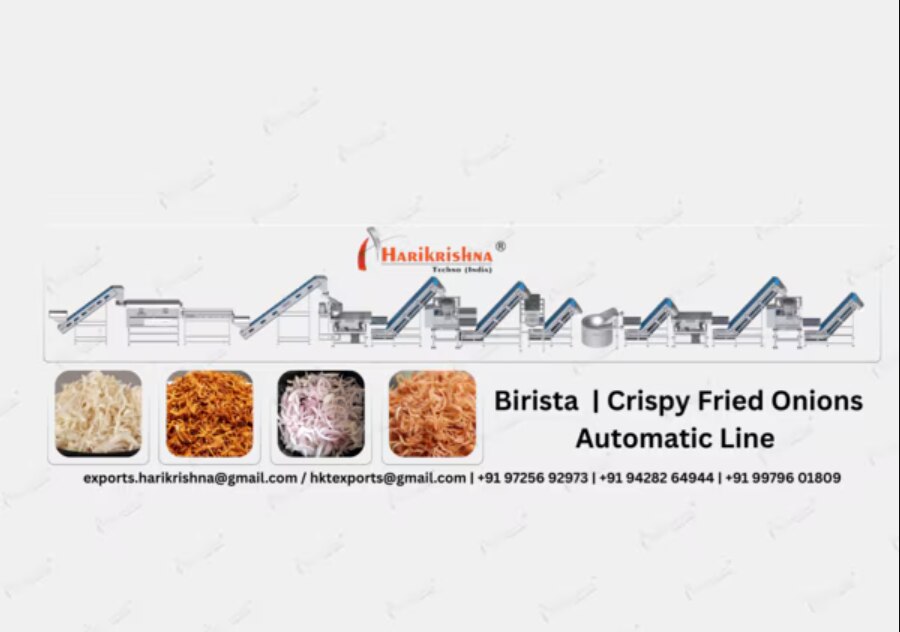
Choose a complete automated line when the real constraint is coordinated trimming, slicing, dewatering, frying, oil separation and packing. In that case, buying one fried onion processing machine does not solve the production bottleneck.
Slicer performance often affects final colour and crispness more than the peeler. Uneven slice thickness makes pieces fry at different rates, so evaluate the peeler, trimmer and slicer together as birista production equipment rather than buying a commercial brush peeler on its capacity claim alone.
What should an onion trial reveal before you trust a capacity claim?
A quoted 500 kg per hour means little until the supplier defines the material measured. Ask whether it means whole incoming bulbs, peeled bulbs or accepted output, then request the bulb-size distribution, skin condition, operator count, run time, peel-removal rate and allowable flesh loss.
If a listing gives no onion-specific capacity, do not use its figure for plant planning.
Run the onion peeling machine in Rajkot with your actual varieties and seasonal supply, not demonstration onions selected by the supplier. Record:
- Feed rate, accepted peeled-bulb rate and unpeeled bulbs.
- Peel carryover after slicing, edible-product loss, damaged bulbs and broken layers.
- Water use, wastewater volume and cleaning time.
- The condition of sliced onions after frying, including visible skin flakes, uneven browning and excess moisture.
The trial must show the trade-off: weak brush contact leaves skin that darkens during frying, while excessive pressure or residence time removes flesh and reduces saleable yield. Include brush wear checks, adjustment range, replacement criteria and spare-part availability.
For a Rajkot installation, verify electrical supply, motor protection, wash-water and drainage connections, dewatering space, compressed air for air knives, sanitation clearances and access to brushes. Confirm that the supplier’s commercial brush peeler fits the available utilities, not just the floor footprint.
Harikrishna Techno (India) belongs in the comparison only after it documents these onion-specific results and the operating conditions behind its quoted capacity.
Related products
 | PEELER PEB-800 is a versatile food processing machine for washing, scrubbing, and peeling various root vegetables and fruits. View product → |
 | PEELER PEB-800 is a versatile food processing machine for washing, scrubbing, and peeling various root vegetables and fruits. View product → |
When is a brush peeler the wrong investment for a fried-onion plant?
Buy a brush peeler for fried onion producers in Rajkot when bulbs arrive steadily with substantial, reasonably dry outer skin, manual peeling limits labour or throughput, and you accept a defined flesh-loss rate. The line must also control wash water, peel disposal, drying and sanitation.
| Option | Best fit | Main limitation |
|---|---|---|
| Manual or semi-automatic peeling | Small batches, variable onions, minimum flesh loss | Labour and slower output |
| Brush peeling | Steady supply with adherent dry skin | Requires yield and carryover control |
| Abrasive peeling | Continuous operation needing aggressive removal | Can damage bulbs and reduce saleable birista |
| Complete automated line | Trimming, slicing, dewatering, frying and oil separation are linked bottlenecks | Higher integration and commissioning demands |
Keep manual or semi-automatic peeling when suppliers already deliver clean bulbs, batches are small, or onion condition changes sharply. Choose abrasive peeling only after a yield-and-damage trial proves stronger contact will not reduce saleable birista. Choose a complete line when coordination, rather than peeling, restricts accepted output from the fried onion processing machine.
Put these limits in the purchase specification:
- Accepted peel carryover after slicing
- Maximum edible flesh loss
- Maximum damaged-bulb rate
- Moisture before frying
- Saleable fried-onion output
- Cleaning time, including brush access and sanitation
The right machine improves accepted fried-onion output, not the largest unqualified kilogram-per-hour number.
Frequently asked questions
When does a brush peeler suit onions for birista production?
It suits onions with dry, adherent outer skin when manual peeling limits labour availability or throughput. It remains one stage in a line that also includes grading, topping and tailing, washing, slicing, dewatering, frying, draining, cooling and packing.
Will brush peeling remove enough skin without reducing frying yield?
Confirm this with a trial that measures skin left on the onion, edible flesh removed, whole-onion loss and final fried-onion yield. A capacity claim is useful only when tested with your onion varieties, sizes and skin condition.
How does a brush peeler compare with other onion-peeling choices?
Compare it with manual peeling, abrasive peeling and knife-based systems for labour demand, product loss, throughput, cleaning effort and the range of onion sizes each method handles.
What should an onion trial reveal before you trust a capacity claim?
Record feed weight, onion size distribution, operating time, peeled output, rejected onions, skin residue, flesh loss and downstream frying yield. Repeat the test with the onion batches you plan to process.
When is a brush peeler the wrong investment for a fried-onion plant?
It is the wrong fit when volumes are too low to justify mechanisation, onion lots vary beyond the machine's workable range, skin is excessively wet or loose, or the trial shows unacceptable flesh loss and frying yield.
Related products
 | PEELER PEB2000 is a versatile food processing machine for washing, scrubbing, and peeling various root vegetables and fruits. View product → |
 | PEELER POLISHER HKT polisher come with rollers and rollers covered with soft, durable brushes ( made of food-grade materials). |
 | PEELER Our high-production abrasive peeler is a robust industrial machine designed for the efficient and continuous removal of skin or peel from a variety... View product → |
 | Birista Plant At Harikrishna Techno India, we offer a comprehensive and fully automated solution for the production of perfect birista (crispy fried onions). View product → |
Keywords