Removing the outer surface of vegetables can become a significant preparation task when production volumes rise. Food processors consequently evaluate different peeling technologies according to the raw material, desired surface finish and production requirements.
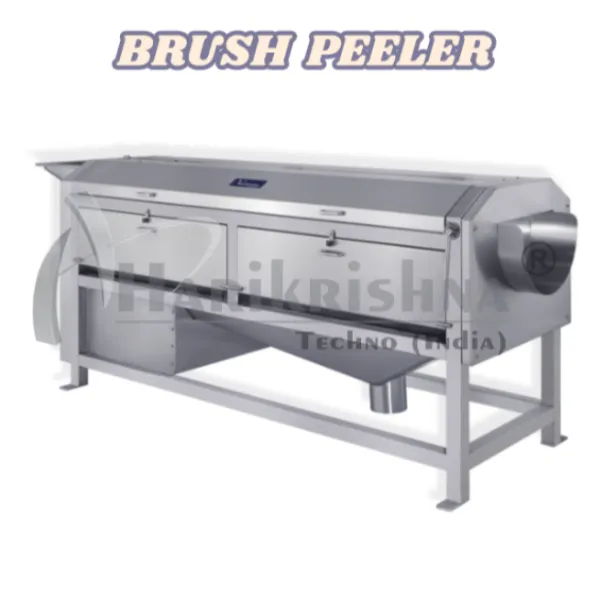
A Brush Peeler uses rotating brush action to work on the surface of suitable produce and can be integrated into organised vegetable-processing operations.
Understanding Brush-Based Peeling
Unlike equipment relying primarily on aggressive abrasive contact, brush-based systems use brushing action against the produce surface.
The suitability of this approach depends on the vegetable being processed and the required degree of surface cleaning or peeling.
That makes product testing and application discussion important before machine selection.
Where Brush Peeling Can Support Production
Brush systems can be considered in processing environments handling appropriate vegetables and root crops.
Potential applications include preparation lines serving:
- Vegetable processing units
- Commercial kitchens
- Snack manufacturers
- Ready-to-cook food businesses
- Agricultural produce processors
The equipment should always be matched with the specific raw material rather than selected solely because a certain peeling method is commonly used elsewhere.
Consider Product Condition
Two batches of the same vegetable may behave differently depending on size, maturity and surface condition.
Processors should therefore discuss realistic raw-material conditions when evaluating equipment. This provides a better basis for deciding whether brush peeling suits the intended application.
Integrating Peeling into a Gujarat Processing Facility
A peeling machine works most effectively when surrounding stages are planned properly. Washing, peeling, cutting and further processing should operate at compatible capacities.
Harikrishna Techno (India), based in the Rajkot manufacturing ecosystem, provides food-processing machinery for commercial applications.
For processors across Gujarat, locally relevant machinery sourcing can also make technical discussions about plant configuration, raw-material handling and capacity planning more practical.
Evaluate More Than Purchase Price
A low initial machine cost does not automatically mean the equipment is economical for the intended operation.
Buyers should also examine:
- Actual processing capacity
- Labour requirements
- Cleaning procedure
- Product handling
- Space requirements
- Utility needs
- Compatibility with existing machinery
- Maintenance accessibility
Making the Right Decision
Start by defining the outcome expected from the peeling stage. Determine the vegetables being processed, daily volume and required condition of the product after peeling.
Then examine how the machine fits between washing and subsequent cutting or processing.
For commercial food businesses in Rajkot and throughout Gujarat, this process-focused approach can make it easier to identify a brush peeler that supports everyday production rather than creating a mismatch elsewhere in the line.
Keywords